
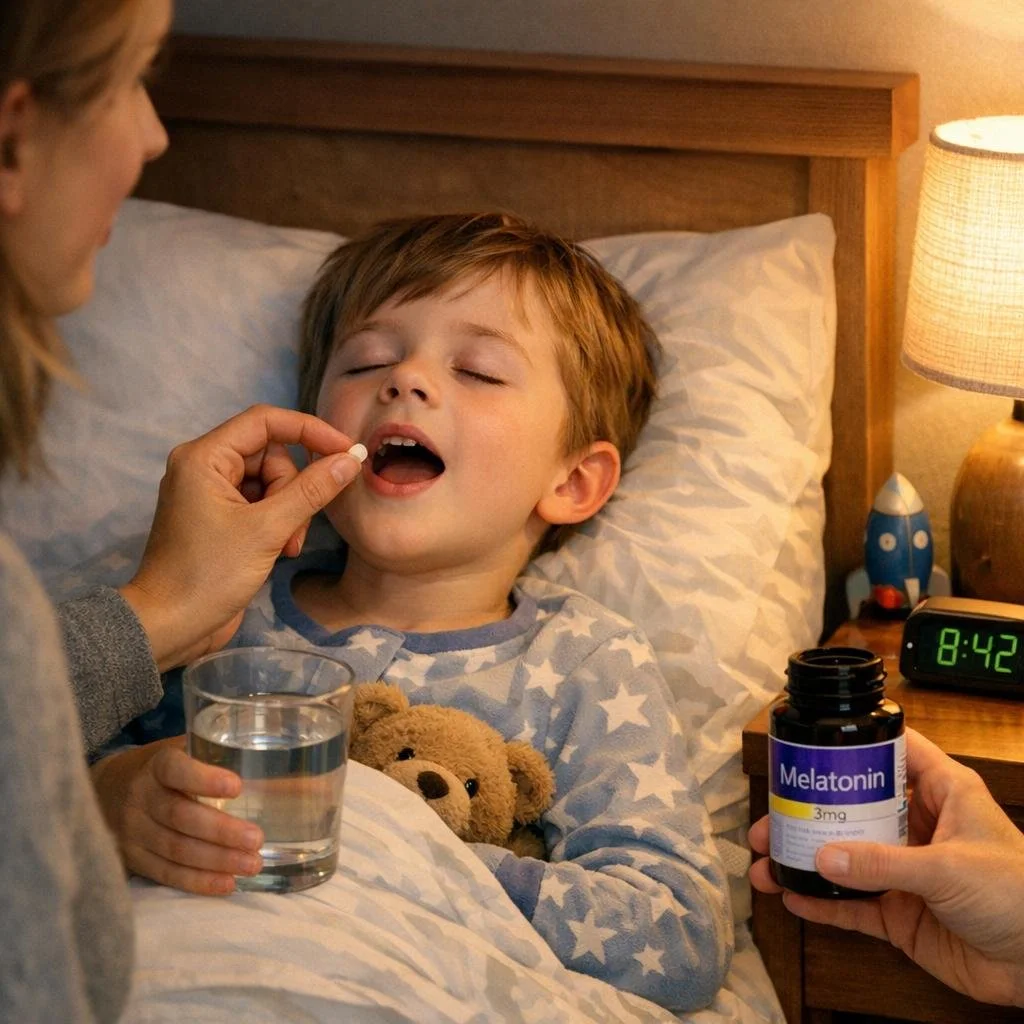
I was glad to see this article because I feel that I have sometimes been the lone voice in raising concerns about the use of melatonin for routine sleep problems in children (and in adults as well).
Melatonin, while available over the counter, is not the benign supplement that some people think it is. It is an actual short chain hormone that has profound actions on the brain and is involved in multiple delicate feedback loops. There are relatively few studies on its long-term safety use in adult and virtually none in children outside of the moderate to severe neurodivergent population like autism, where the risk tolerance may be different.
Low dose short-term use of melatonin for special circumstances like acute situational stress or jet lag may be appropriate, but that's where I would personally draw the line. Beyond that, you run the risk of suppressing and altering feedback loops pertaining to hormone and neurotransmitter regulation in a rapidly developing pediatric brain.
This is not to say that sleep difficulties in children should be brushed off. They can be significantly impacting a child and their parents. It's just to say that different interventions will be more effective and safer in the long-term but will require a little more detective work than simply giving a melatonin lozenge at bedtime.
https://link.springer.com/article/10.1007/s12519-025-00896-5?utm_source=klaviyo&utm_medium=email&utm_campaign=%28Friday+Email+-+Chris+Kresser+General+News%29+Chris%27s+Friday+Favorites&utm_term=World+Journal+of+Pediatrics&utm_content=World+Journal+of+Pediatrics&_kx=ZpXBDTeEF9QJhwDqQXXrImrT_HpFsBz1ZlYMbsx_Vq0.my75y6