
Persistent Post-Epidural Pain: Lumbar Meningeal/Fascial Tethering

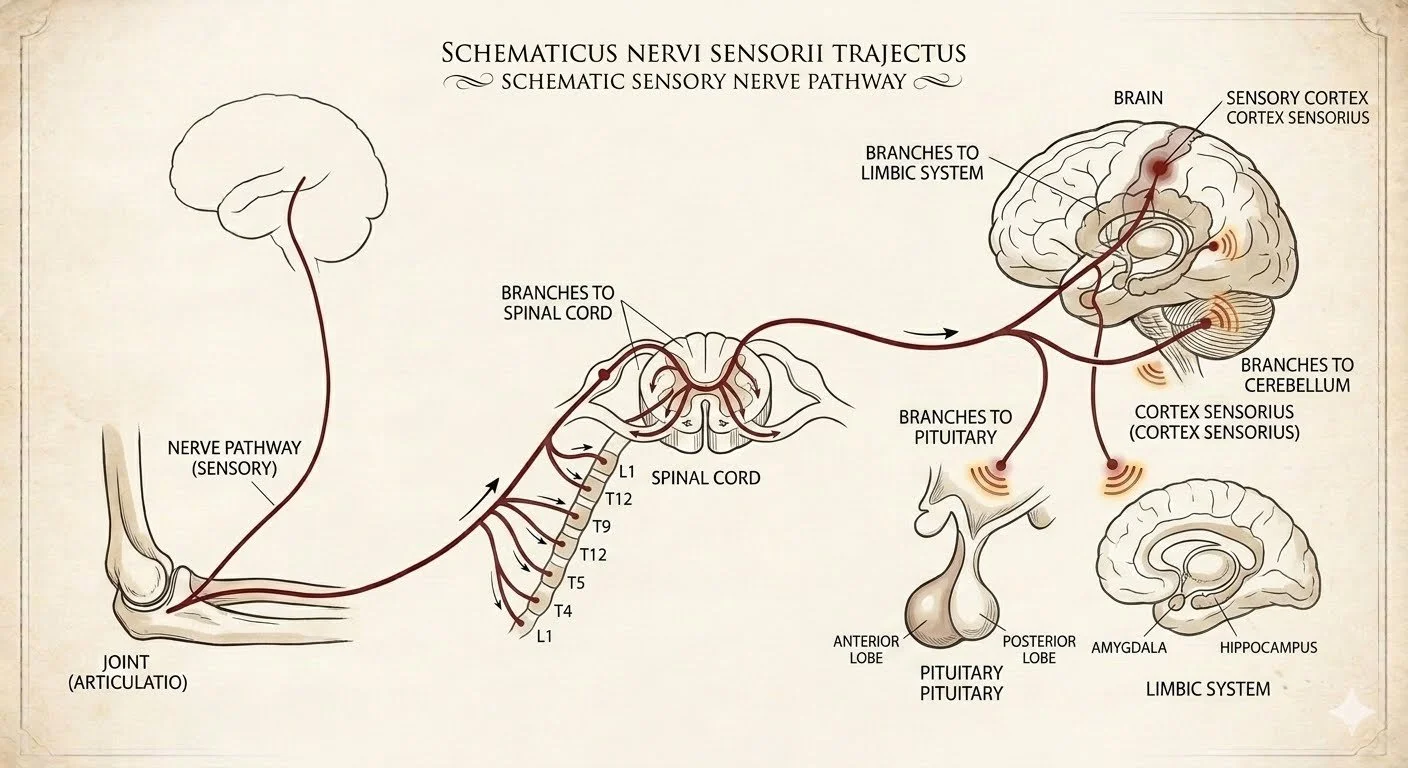
Just over 8 months ago now, we brought our little boy Lee into the world and as special as that is, it was definitely a tough situation. Long story short I ended up getting an epidural and with a difficult placement was poked about 7 times. I also ended up receiving the dreaded spinal headache which is one of the risk factors of an epidural that happens when the Dural sheath is punctured. When the Dural sheath is punctured CSF or cerebral spinal fluid, leaks out of the hole creating a deficit in volume which decreases the pressure. Imagine your brain in a cup floating in liquid and then put a hole in the side of the cup allowing fluid to leak and now your brain begins to sink.  To fix that we had to go back into the ER where they had to place another epidural to put in a blood patch (a band aid for the hole to stop the leaking), this took them another 4 attempts, another 4 stabs to my spine. This was by far the worst pain I have ever experienced. No joke, I walked into the ER looking about as rough as it gets with no care because I was seriously in that much pain. After feeling better and actually being able to function, I experienced this tight rubber band from the base of my skull to my legs, creating a sensation of collapse with too much forward flexion, too much was as little as looking down. For anyone that has breastfed or held a baby, imagine holding that baby without being able to look down at them because it caused too much pain. Dr. Demel and I ultimately realized there were some residuals of tethering from the fascial system and the meninges that were damaged with the multiple pokes.


There is a point to this story, I promise. Here it is:

With the multiple punctures to the fascial system, it had gotten bound and tugged and didn't really heal well unsupported and on it’s own. With continued chiropractic care including both adjustments and soft tissue care including cupping, I was finally able to feel normal again. Here is how each of those pieces were able to help. Adjustments: to clear any segmental dysfunction occurring and help improve the function of the soft tissue that was already incredibly damaged. Soft tissue care/ cupping: to help release adhesions that had occurred with the binding of the fascial system in the lumbar area around all of the poke sites.

For more information on cupping and fascia please refer to my previous blog: Soft Tissue Care- Part II

Unfortunately, it took me experiencing this first hand to realize how many of my patients have experienced or are experiencing something similar and have been overlooked. Think MS or cancer patients or anyone that gets multiple spinal pokes for assessments or procedures. As awful as this pain was, it has brought a greater understanding and thought to treating patients that may be experiencing something similar. 

So, if this sounds like something you can relate to we can and would love to help you!

Aerobic Exercise Idea for a Long COVID Winter-

After our Silver Sneakers orientation Facebook Live presentation earlier this week (videos to be found on the office Facebook page), I received several questions from folks wondering how they can replace some of the cardio workouts they have been getting from outdoor walking, especially since the fieldhouse at the Cannon Falls school has been closed. We have been lucky with a mild winter so far, but soon the temps will drop and the roads and trails will have a treacherous layer of ice.

One simple solution that we have implemented at my house is to find a new life for one of of our outdoor bikes. My husband and I , and a few members of our pandemic bubble, have made the best of the COVID summer by avidly exploring new bike trails in the neighborhood over the past 6 months. This came to an end with one last hurray on Thanksgiving morning. Not ready to invest in a high quality stationary bike, a friend suggesting converting one of our summer bikes into an exercise bike by mounting it on a trainer. Bingo, I found a good used magnetic trainer on Craigslist and baited a handy friend to pin the back wheel. at least twice a week or more, I hop on it in the morning for a robust 30-40 pedaling session.

So think about that option is you have a decent bike that spends half the year in the garage. A good used magnetic trainer will cost you between 100-200$. You can mount it indoors for the winter and revert it to a regular outdoor bike for the sunny months.

There are also a trove of free online bike exercise workouts that will prevent the boredom of just mindlessly pedaling. I have been using the free videos from the Global Cycling Network on Youtube. Pretty fun and some British accent to boost.

Post-Surgical Neck and Shoulder Pain: Should you see a Chiropractor ?

This is a very overdue blog… and as usual, it takes someone’s misery to spur me to the keyboard.

The privilege of being in practice for 26 years is that you see patient’s through multiple milestones of their general health journey in the background of their chiropractic care. And some of the milestones involve surgeries with general anesthesia.

It took me several years to connect the dots between patients presenting with sudden new onset of neck shoulder and arm pain and recent history of full anesthesia surgery. Coming out of surgery with pain in the shoulder, regardless of where you had surgery is not uncommon. This is the result of air from the abdominal cavity trapped under the diaphragm and referring to the shoulder. It is typically not related to any trunk, neck, or arm position and disappears within 7 days. However the patients I was dealing with were still very much having pain after weeks or months and were unable to turn their head or lift their arm.

General safe anesthesia requires that airways are maintained open and ventilated at all times. In order to achieve this, the upper body has to be propped up in a way that allows the attending anesthetist to properly insert an intubation tube down the throat. The body positioning happens when the patient is sedated or already under, so you may not be aware of what sort of positional strain is applied to your neck and arm. If you were awake, you would ask the team to stop and reposition you. But you are not.

The picture I have attached comes from a manufacturer of foam wedges that are used for surgical positioning. You can see that the intubation positioning requires the patient to be able to tolerate a certain amount of lower cervical extension and posterior shifting for prolonged periods of time. This may, or may not be the case depending upon your individual spinal anatomy and cervical curve. I have especially noted that patients with short neck, with rounded upper back and a history of cervical degenerative disc disease, scoliosis or stenosis are more likely to develop a neck and shoulder positional injury .

If you or a loved one continues to struggle with pain in the neck, upper back, shoulder or arm following a surgery that involved total anesthesia, consider getting evaluated.

Lyrica for Back and Leg Pain: What Does the Research Say ?

https://www.nejm.org/doi/full/10.1056/NEJMoa1614292

I was reminded of this research article from a few years ago after a patient encounter earlier this week. There is (thankfully) a strong push to move patients with various sources of chronic pain away from using opioid management. However the flip side of the equation is that the alternatives often prescribed can be problematic.

One medication that is increasingly used for chronic pain resulting from a compressed spinal nerve (chronic disc problem or stenosis) is Gabapentin or Lyrica. While slightly different, they both fall in a class of medications called anticonvulsants (originally used as first generation anti-seizure meds), working as gaba analogs, later used for chronic idiopathic or diabetic neuropathic pain. In the past three years I have seen more and more patients showing up with both in their medication list for pain resulting from chronic nerve root compression causing sciatic type symptoms.

As was the case with the patient encounter I had this week, patients are often questioning the gaba analog meds because the sides effects are really quite intense for a lot of them. The other consideration is whether or not the medication is truly effective in their particular situation, since gaba analog medications were initially released for nerve pain caused by non- neuromusculoskeletal conditions.

The research paper in question sought to get some answers and the results from that trial at least were not suggesting that gaba analogs were effective compared to placebo, but that the side effect in the medication groups were high. I have shared that paper with many patients, often confirming their gut feeling and as a starting point to revisit the medication usage with the prescribing doctor. It is also a good conversation for me to have with our patients that reverting some forms of chronic pain will require patience, good detective work to assess the true origin of the pain, and the willingness to do what is necessary to recover because the “magic pill” is not as magic as touted.

Soft Tissue Care- Part II

What does cupping and IASTM actually do? Well in order to explain this, we need to discuss what fascia is. Fascia is an intertwining web of connective tissue that connects literally everything. We use cupping and/ or IASTM to lift or compress the top tissue layers as well as incorporating movement to create heat or “controlled inflammation” in order to allow for the hyaluronic acid binding points to separate and collagen fibers to realign to parallel pieces that slide with each other in the appropriate movements rather than perpendicular pieces that fight and create further binding or disrupted smooth movement patterns. 

Here is a blog that discusses fascia as a living matrix, it’s pretty cool:

https://sports-seminars.com/fascia-as-a-living-matrix/

Yoga and Chiropractic Part 3: Standing Alignment, Mountain Pose

Pretty much any yoga routine is going to have a standing sequence. This will usually be at the beginning with sun salutations, and will emphasize proper alignment of the body in the frontal plane (when looking at the body from the front) and sagittal plane (looking at the body from the side).

I want to spend more time today talking about the importance of the sagittal alignment, because I see so few people in group classes that perform the salutation with good side alignment.

Modern life is all happening in front of us and often below our ribcage, creating a pattern of posture distortion pulling us forward in relationship to our center of gravity. There is a brain element to this pattern, as our postural righting centers become “numb” to the fact that we are offset too far forward. This creates a constant mechanical overload of both the joint structures of the neck, upper back, down to the heels, as well as the posterior muscle groups. Practicing normal side alignment allows our brains to recognize when we have shifted away into forward stress and move back into a gravity neutral alignment.

The traditional yoga mountain pose is an ideal place to practice this. The photo demonstrates how the hips stack over the heels, the shoulder stack over the hips, and the head stack over the shoulders. In the brief video, we will go over the sequence in which you realign your body one joint at the time, starting at the feet / ankles and ending at the head

Here is the link to the YouTube video going over this alignment: https://youtu.be/vWDng2vm4dA