
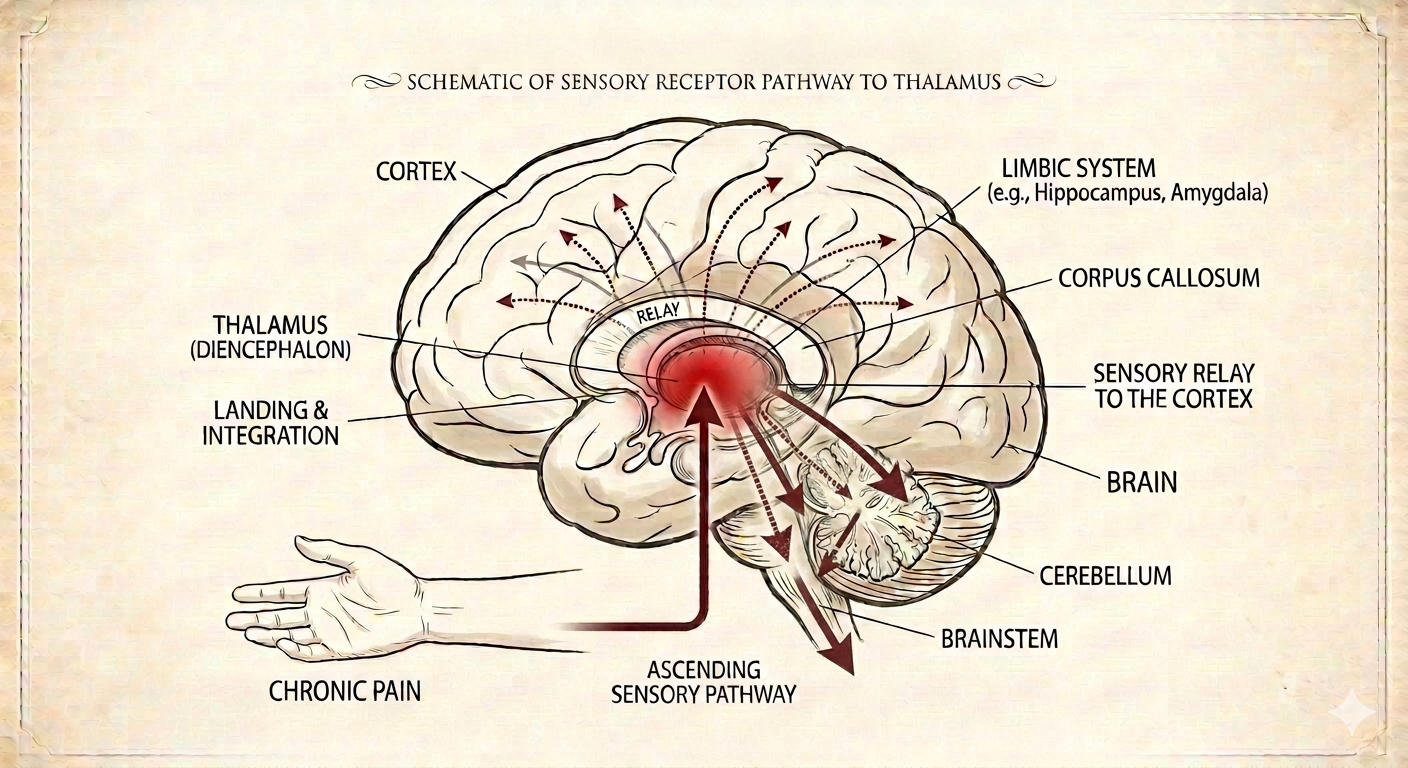

In this brief section I want to further expand on some of the mechanisms by which chronic pain develops from acute pain, and why it may do so.
– Acute pain is usually described as new onset pain that resolves within 6 weeks, while chronic pain is pain that is persistent 12 weeks after an initial insult or trauma. So chronic pain normally starts becoming chronic pain anywhere between 6 and 12 weeks.
– Acute pain transmission to the brain is pretty energy consuming, so if the brain senses the need to continually experience pain signaling for self protection, it will switch to a more efficient and less metabolically demanding way of doing so. The type of chronic pain fibers are often referred to as "C fibers", which has less myelin, transmit pain signal more slowly, but also more efficiently. C pain fibers are also known to sprout more side connecting branches to other parts of the nervous system in the spinal cord, and at the level of the brain.
– Chronic pain signaling is happening increasingly less in the periphery, at the site of the original insult, and more so at the level of the central nervous system, especially starting to give side branches into other brain centers that manage sleep, mood, autonomic regulation, and thus becomes increasingly independent from the original injury, almost taking a circuitry and a life of its own over time. The chronic pain becomes more "efficient" in the sense that it takes less signaling for the body to experience the warning signal. It had an evolutionary benefit in making us aware more easily that a previously injured area is at risk of reinjury for the sake of self protection, but in our modern times, means that the pain is more easily triggered with a very minimal threshold, which is no longer an evolutionary advantage.
– The circuitry and neuronal hardware of chronic pain take some time to build up, and unfortunately can also take some time to takedown. Which is why chronic pain is often persistent when all the apparent active triggers may have been resolved.
– Chronic pain is also more likely to develop, and persist, in certain unfavorable conditions: a state of general inflammation, a state of general sleep deprivation, mental or physical stress, and certain nutritional deficiencies. It's also possible that certain medications will make chronic pain more likely to develop. This is why addressing chronic pain needs to be more comprehensive than addressing acute pain, and can be much more challenging.