pain

Topical treatment for pain and inflammation

It's a question that comes up frequently and I realized recently that I don't have a good written resource material to direct patients to and I find myself repeating the same thing over and over in the middle of a busy day. Unlike some of my colleagues, who tend to downplay their value in an overall treatment plan, I feel that topical's can have huge benefits to direct therapeutic activity to a local local area, and can overall minimize the patient's need for more toxic oral medications.

Understand that this is a generic list, and that you will probably need to figure out with your own individual healthcare provider which 1 of these may be the best, and understand that you may need different topical treatments at different times. Also understand that while mostly safe, a few of them do have some potential contraindication related to other medications and comorbidities that you should be aware of.

Topical treatments full in different broad categories matching their mode of action: counter irritant, vasodilators, anti-inflammatory, analgesics, and some of them crossover into more than one category.

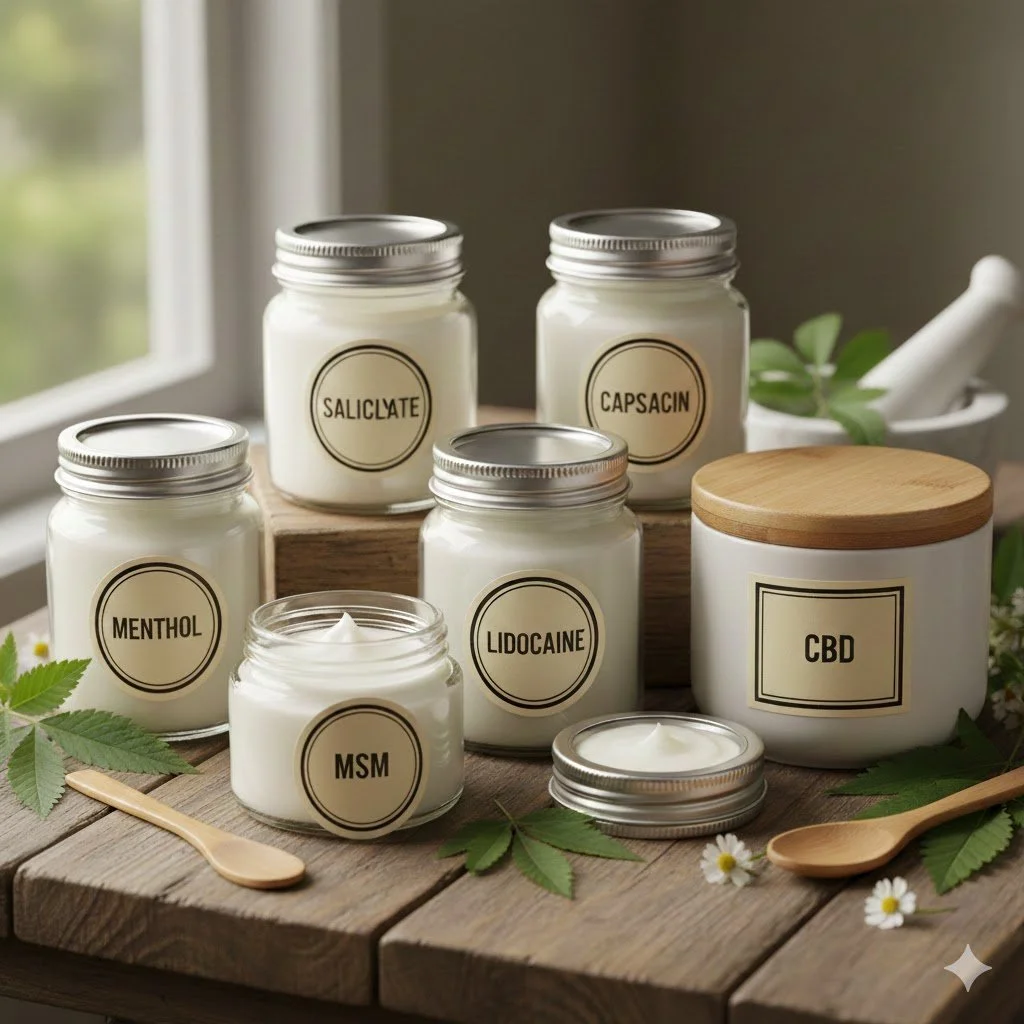
COUNTER IRRITANTS: those agents tend to create a local receptor response that competes with pain receptors, thus tricking the body in perceiving sensation rather than pain. Menthol is probably the most common one. It's found as a base in the majority of topical treatments. It's usually quite safe, short acting and reversible. There's a huge variety of products available, and ultimately it boils down to preferring water-based versus oil-based, and how much of an overlying sent or not you want to have.

VASODILATORS: those agents tend to increase local blood flow by increasing vasodilation of smaller blood vessels. The main benefit is to improve circulation to a particular area, especially in the periphery of the body. The main ingredient is capsaicin, derived from hot peppers. On the tail end of the activity, they tend to have a mild analgesic effects. The benefits are to improve blood flow to deliver soft tissue repair nutrients, especially oxygen, in areas that are having a hard time healing or are somewhat avascular because of previous trauma or general health issue with blood circulation. You have to be quite careful with them, since they can create great irritation to the skin, and they are more medical contraindications to using them, especially with peripheral vascular disease and diabetes. It comes in different potencies, and you also have to be extremely careful not to rub your eyes after applying them.

ANTI-INFLAMMATORIES: it's a relatively broad category, with many agents having a secondary anti-inflammatory effect in addition to another primary effect. The effect pathways of information in peripheral tissue. This includes both pharmacological over-the-counter substances as well as naturally occurring substances.

- salicylate and dicofenac are topical versions of pharmacological oral equivalents, which are available over-the-counter. (Aspercream or generic equivalent is the most common version). They are quite effective, have a moderate acting range, but have to be used very carefully especially if it's used consistently in the long term because it does eventually reach your bloodstream. I think there is definitely a time and a place for short-term use during acute trauma recovery, to minimize the need for oral pain medication. There are some definite contraindications, so best to check with your provider before using.

-Essential oils like frankincense: should be used in small amounts in a carrier oil because of their potency, but can be a very nice long-term alternative because in smaller doses they really quite safe.

- Arnica: increasing in popularity in the US, I grew up with Arnica as a mainstay in our pharmacy box. It's a little bit of an atypical anti-inflammatory, which is used mostly for acute trauma and contusions. It has virtually no side effects so that one is safe for just about everyone to try.

- CBD: an oil-based extract from the hemp plant, CBD alone has no psychotropic effect and is relatively easy to use in the long term quite safely. I find that CBD takes a little bit to kick in, and I think it's best used for long-term management of chronic joint or soft tissue inflammation rather than as an acute aid.

- MSM: a sulfur based compound, it has a great safety profile when used topically. It has a mild anti-inflammatory effect, but is primarily used to support chronically injured collagen, such as osteoarthritis of joints, and chronic ligamentous or tendon injuries.

ANALGESICS: it's a little bit of a difficult category to pain, since analgesics means pain reducer. The mechanism of pain can vary in different patients, so all of the above can act as analgesics in a particular patient. However technically only very few compounds are considered true analgesics and they are relatively uncommon. The most commonly available over-the-counter is a pharmacological compound called lidocaine usually applied in transdermal patches. Lidocaine is powerful, short to moderate acting, but it has a fair amount of side effects and many medications adverse interactions for a lot of people so I would use that one was a lot of caution and with the green light of your provider. There are very few nonpharmacological true analgesics, such as California Poppy.

This is not an exhaustive list, with several other less commonly used compounds such as homeopathic's, and many bundled products. But this should at least be enough of a background for patients to start asking the right questions to select the right topical for their personal use.

How frequent is spinal pain in children?

https://www.sciencedirect.com/science/article/abs/pii/S1413355524000042

I continue to listen to a series of research podcasts, catching up from 2015 and on. All I can say is that we have some amazing colleagues doing serious research and enlightening our day to day practices.

This particular piece of research caught my attention because I've been thinking about children a lot recently. We have a crop of new babies coming in to the office, the children are back in school dragging heavy backpacks and happily crashing into each other in their fall sports.

Over the last 30 years of practice I feel that at times I have been fighting an uphill battle in the area of chiropractic pediatrics, trying to convince many parents and the community at large that children do develop spinal problems fairly early, fairly frequently, and that we are currently operating by a false narrative that back pain is not something that happens to children but rather to adults, and that if a child is complaining about pain, it is usually a psychological reason behind it. Up until recently we've not really had much research data to back this up.

This brand-new study (January 2024), from Brazil, indicates that a whopping 30% of adolescents may complain of spinal pain that could be at times disabling. What's most interesting looking through the fine print of the paper is that the pain pattern is really quite similar than adults already. (Objective factors, risk factors etc.) these numbers fly in the face of our current cultural understanding of spinal pain in children, much less our healthcare intervention resources. Having had the pleasure and privilege of working with individuals from birth to natural death over 30 years, I can say without a doubt that I have been shocked by the types of finding I've seen in rather young children over the year. But ultimately, as time goes by, I see the continuum of presentation between my adult patients and the history of their 1st trauma much more clearly now. When I see the children taking tumbles on the playground, falling down the stairs, and wrestling with the siblings I realize that none of us adults could do this and still get out of bed the next day. To be fair children's neuromusculoskeletal systems are more pliable and a little more resilient than ours, but they do not magically survive some of these injuries without some potential long-term residuals that will manifest episodically into adulthood.

I am most excited about another 10 year longitudinal initiative started in Denmark, currently underway. It will start screening a very large swath of schoolchildren starting in preschool and through high school, looking at a variety of metrics from pain to motor control to balance to visual efficiency. I think were going to get a wealth of data as to how children develop pain over time and what the risk factors are in their history, as well as what early signs in their other developmental milestones may be useful to flag them for early intervention. Those little people are genuinely our most precious resource and it's time we stop writing off their back pain as just something in their heads.

BAROMETRIC PRESSURE, PAIN AND MIGRAINE HEADACHES

I am almost seeing the light at the end of the tunnel on my weather app. We have literally been rolling in form 1 storm system into the next for 10 days now, and while I am quite exhausted by the amount of wet dog smells and residues that this has brought into my house, I realize this is a minor problem compared to what some of our patients have been experiencing in that timeframe.

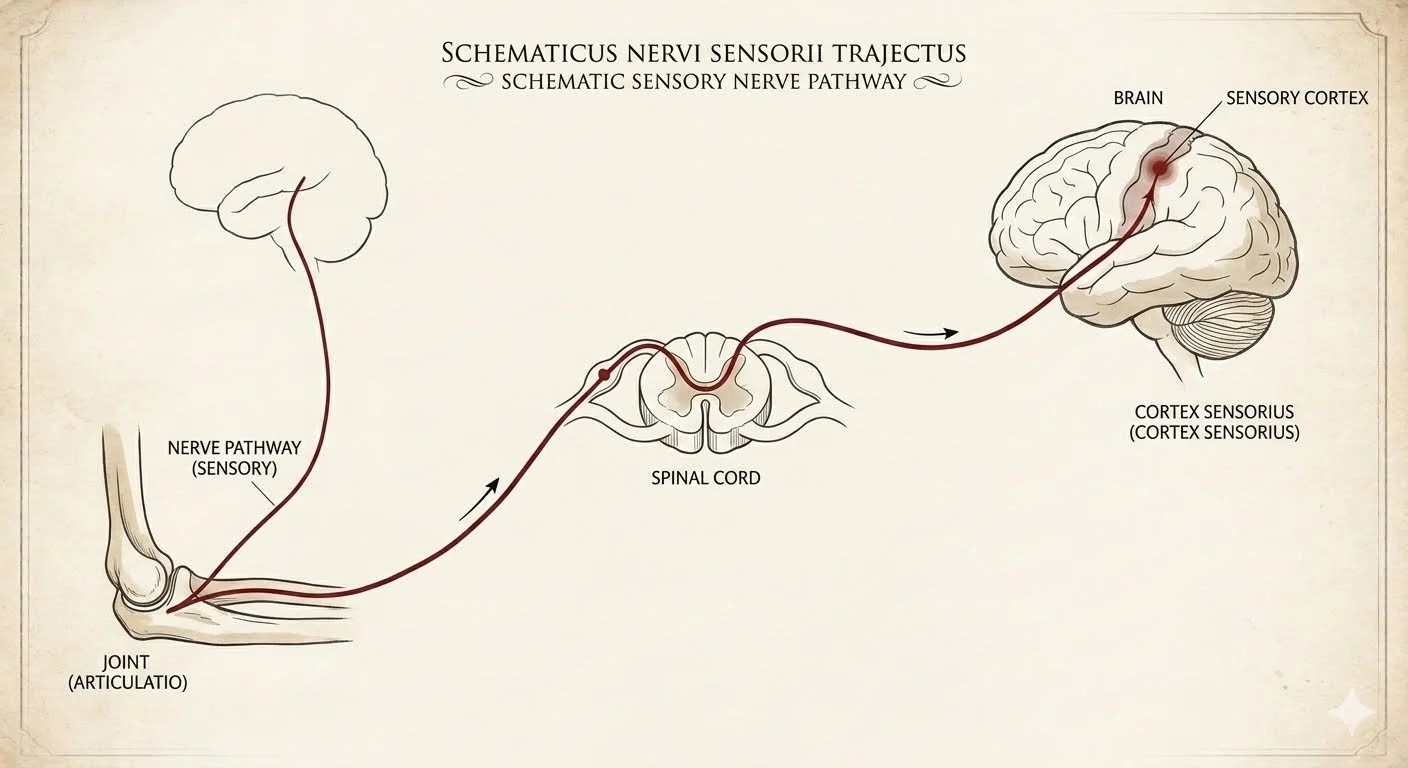
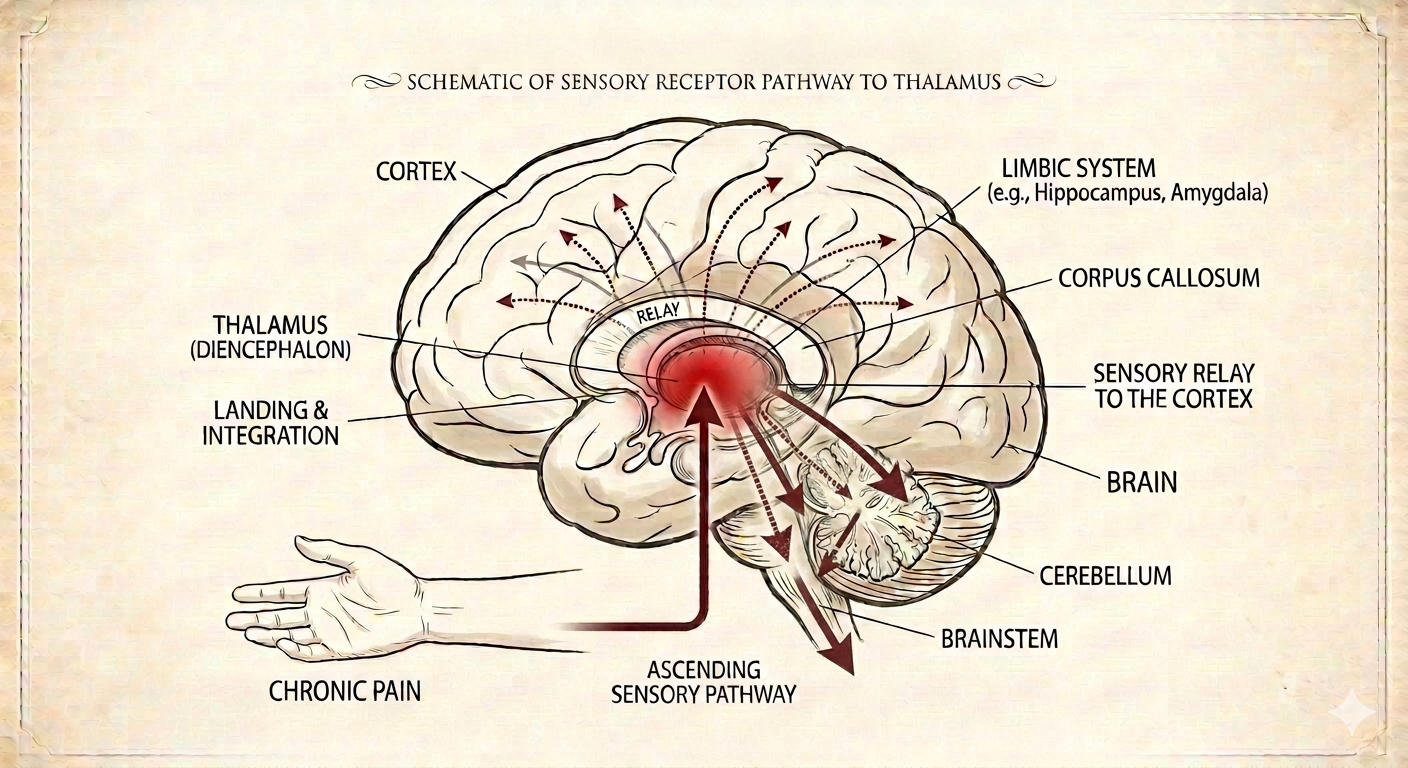
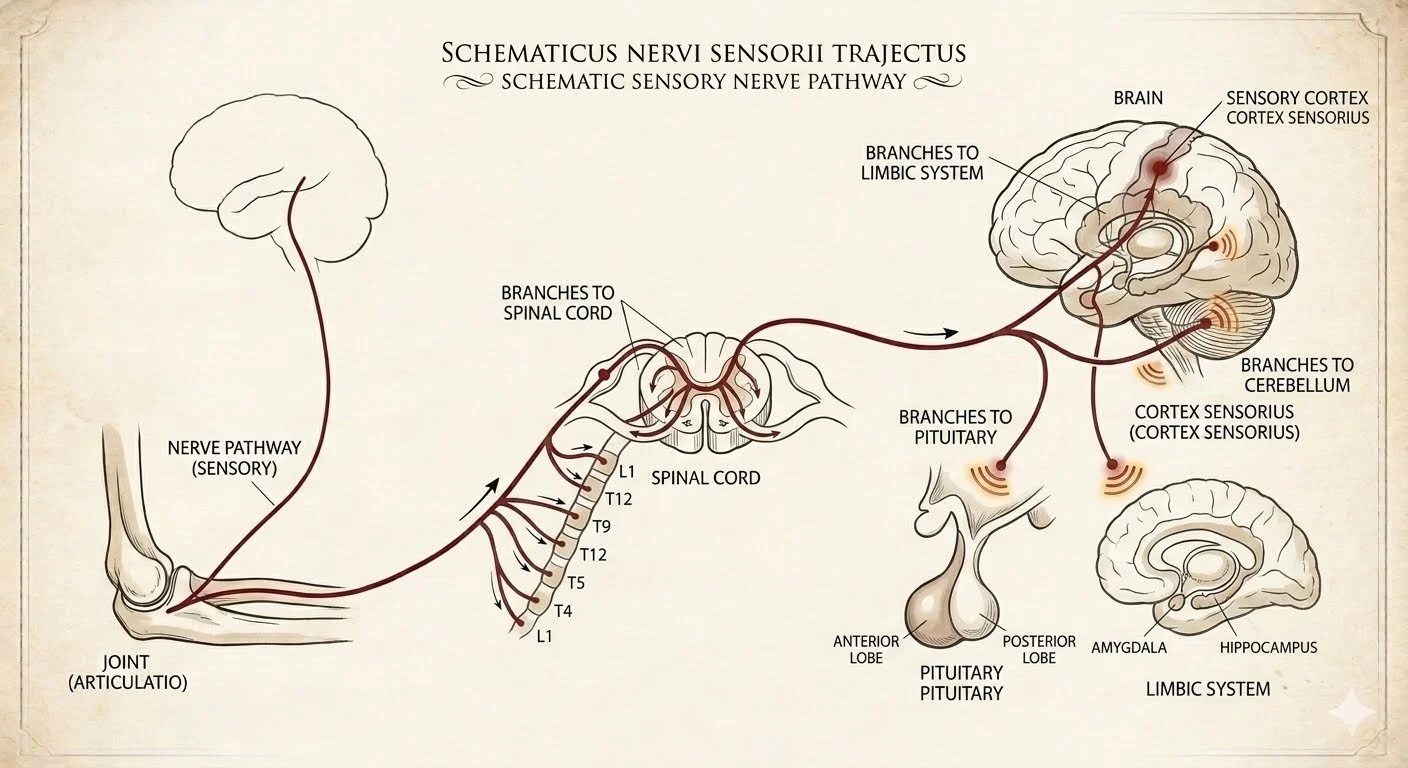
Some patients have conditions that are significantly flared up by sudden severe or prolonged drop in barometric pressures that are associated with storm systems. It used to be considered an "old wives tales"that people could predict upcoming bad weather with the arthritic joints. Modern science has finally caught up with that erroneous assumption. We now know that some of the sensory receptors that are found in many of our joint capsules, whose job it is to send off positional signal to our balance centers, can be expressed in much higher numbers in previously damaged joints, and can have a lower firing threshold over time. This essentially can turn a body part into a mini barometer, and at times more accurate than the weatherman.

The 2 patient populations that seem to be most affected by these barometric pressure changes (there are actually several more but I do encounter them much less commonly), are patients with posttraumatic or osteoarthritis related joint hypersensitivity, as well as patients with migraine disorders.

The scenario often goes as follows: patient has had a serious trauma to the spine or an extremity joint like the knee or wrist, (trauma can be physical trauma or something like surgery), and noticed over time that the joint pain seems to flareup independent of any normally aggravating activities, but seem to coincide with a 12 – 36 hour window before a major storm event. For migraine patients, every other trigger being equal, they are much more likely to start a migraine cycle prior to a major weather event, or with successive storms as we've had recently. The mechanism of action in migraine patients is a little different than for patients with posttraumatic joint sensitivity. Many migraine patients have poor autonomic function, leading to abnormal vasodilation and vasoconstriction. For migraine patients, especially female patients who have a tendency to experience lower blood pressure, the low barometric pressure increases vasodilation, slightly lowers blood pressure, which can be enough of a drop in oxygen concentration in cerebral blood flow to push them over into the beginning of a migraine. Quite interestingly, I recently polled several of my chronic female migraine patients who have barometric sensitivity to find out what the cutoff seems to be for them, (you can find out the barometric pressure on just about any weather app), and it's been remarkably consistent between 28 and 30 mg.

The bigger question looming in everyone's mind is what you can do about it. It's no fun living at the whim of storm systems.

There is no great miracle solution for your body having rewired your peripheral sensory system, but there are couple of tools in the toolbox that may be useful to try

First, most of our chiropractic patients have empirically figured out that scheduling a chiropractic visit in the early phase of the symptoms will ward off the severity of the pain flare up. The chiropractic adjustments help mitigate the amount of fluid pooling that comes with loss of normal joint motion, normalizes joint position sensor activity, and in the case of migraines, stimulates a better autonomic feedback loop.

For joints including the spine, light compression can offset the drop in barometric pressure. Appropriate compression sleeves seem to be helpful for a lot of people. You have to find one that fits comfortably on the body area affected, one that you can wear during your normal activities without problem. There are many brands available and the scope of this blog is not to list them, but I have consistently heard good results from patient to use the copper infused compression type. They do have some options for the spine such as trunk sleeves, which will fit over the low back, and they often have compression base layers that can do the same thing. I would have to say that the cervical spine can be the harder area to fit with a good compression support.

Things are much trickier for patients with migraine disorders. However I would say that compression is also a really useful to to maintain blood pressure, and can be used in the form of compression stockings in the lower extremity (preventing fluid pooling in the lower extremity and maintaining normal circulatory volume), as well as a compression shirts. In addition, anything that can help maintain blood pressure above 100 systolic is helpful: increasing natural salt and electrolytes intake every 2 or 3 hours with proper hydration at the beginning of a migraine cycle, nitric oxide supplementation to improve peripheral delivery of oxygen to the brain, certain of autonomic/vagal breathing exercises to improve proper vasoconstriction feedback loop. Some patients seem to respond favorably to caffeine -containing product to temporarily increase the blood pressure.

While we wait for the last of the storms to clear up, think about how you may be able to incorporate some of these new tools in self care to be less susceptible to the whims of the weather.