
Chiropractic and Referred Breast Pain

Two years after graduating from chiropractic school and while already working full time in Cannon Falls, I received a strange phone call from a person who identified as a chiropractic student working at the same school clinic in South Minneapolis where I had worked as an intern. She seemed to be relieved to have tracked me down and explained to me that she needed me to urgently answer one simple question: how the heck did I resolve Linda’s breast pain?

As it turns out, Linda was my second official patient in my budding chiropractic career. She was assigned to me as I was kicked out of the student clinic and into the “real world”, real green and real scared. She was a hairdresser with chronic neck pain and hands that frequently fell asleep at the end of her workday. She did well with her chiropractic care, which incorporated manual adjustments to the neck and upper back and lot of soft tissue work to the anterior shoulder.

The funny thing is that Linda never told me that the breast pain she had had for years had also resolved with her care. I found out about it from the frazzled student who called me that day. Linda had apparently had multiple breast imaging, examinations, some pretty invasive stuff for persistent breast pain. It went away along with her neck pain and arm tingling but she never bothered to tell me that. A year later, it returned, and the new intern assigned to her case was struggling to get a handle on it and Linda had suggested she track me down.

Breast pain can obviously come from many places, not the least one being of course the breast itself. I would never work up a case without getting breast tissue pathology ruled out (being married to an oncologist, the stats are always vivid in my mind). But once breast tissue pathology has been ruled out, and the patient is still struggling, we need to put on the detective hat and start looking the source of the pain.

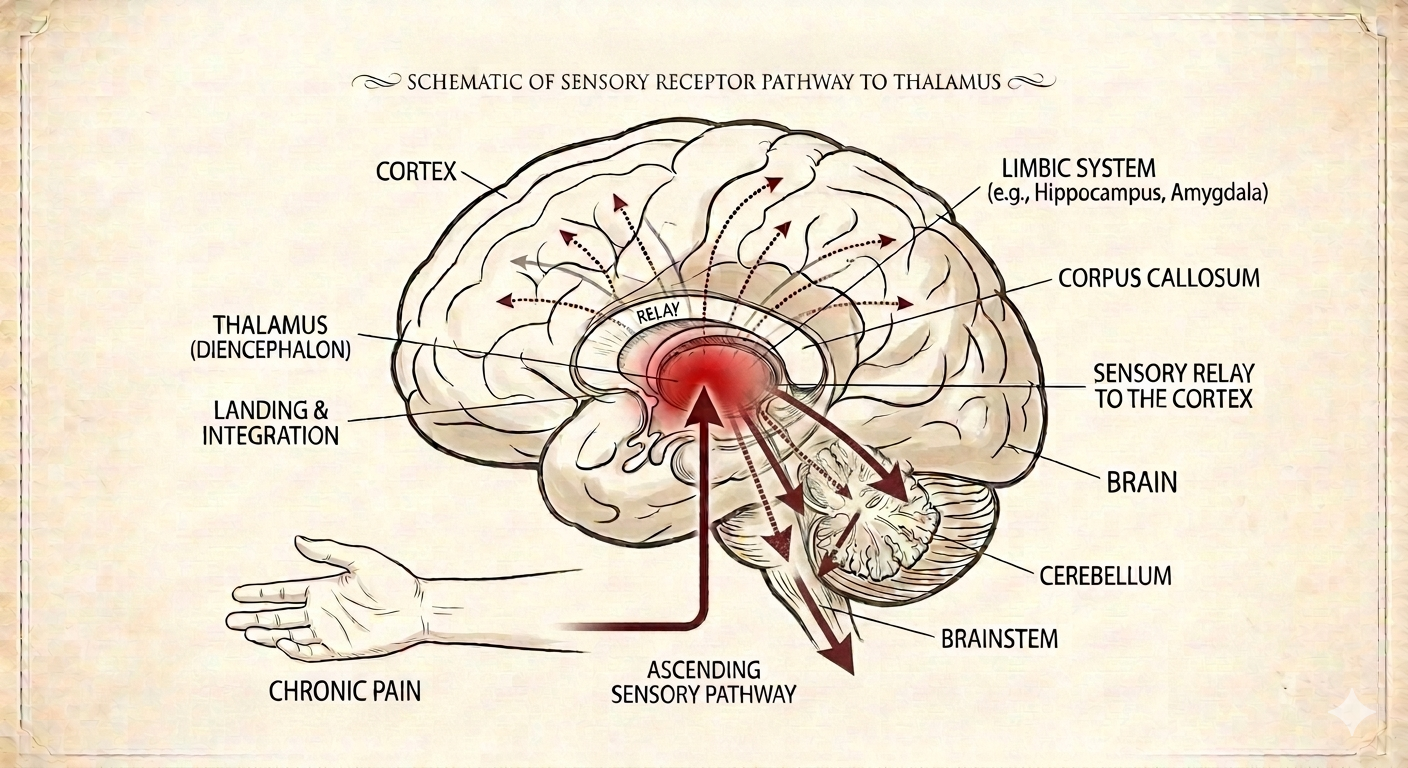
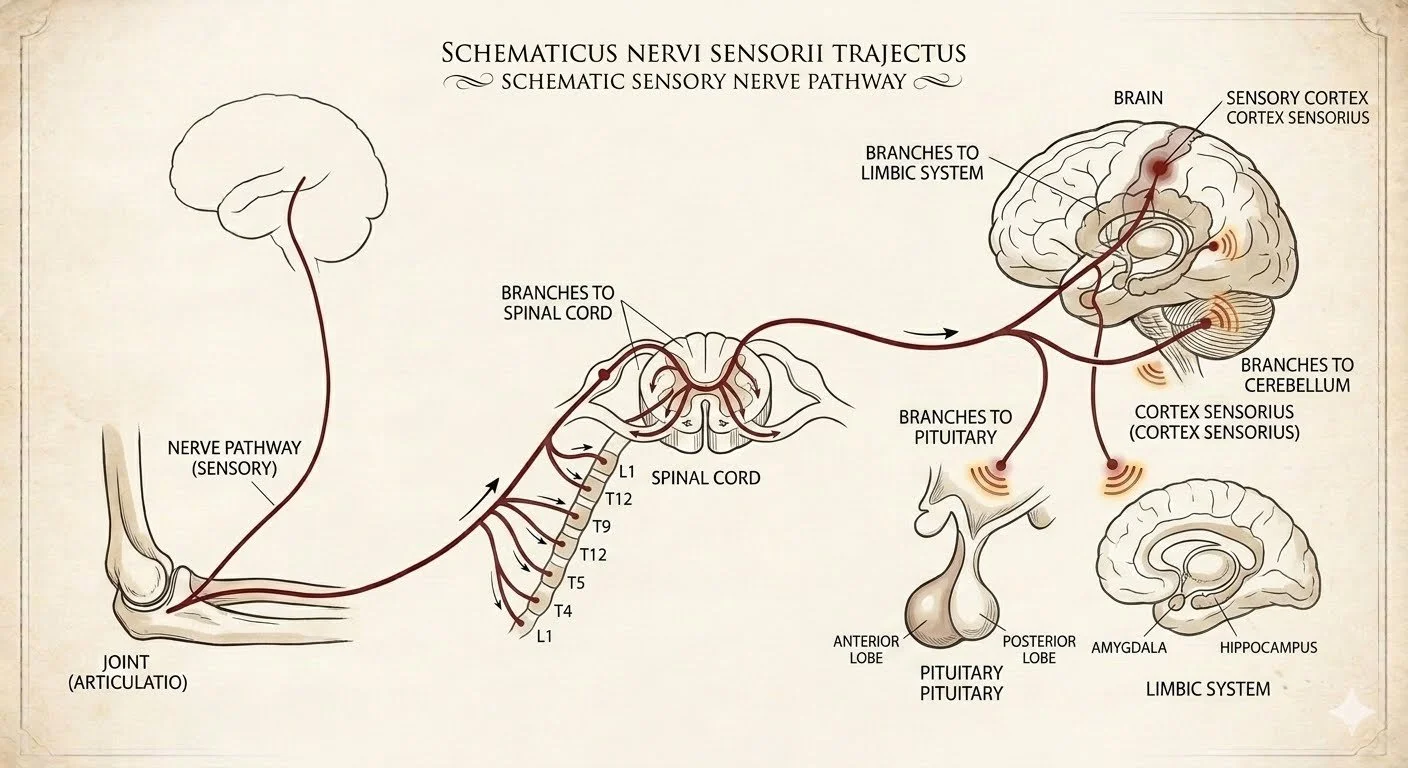
Referred pain to the breast is not that uncommon. If you look at the basic anatomy and neurology of the area, there are a few common sources that are easy to evaluate:

  • Midthoracic spine at the rib junction: The intercostal nerves exit that area and are subject to irritation from a spinal functional lesion. Patients may or may not have thoracic pain along with breast pain. Most commonly, the area around T4-6 is involved.

  • The brachial nerve plexus, originating from the cervical spinal nerves, will radiate in the upper breast area just below the clavicle. Pressure over the area of the plexus entrapped by the scalenes will usually reproduce the pain. There is often a history of cervical anterior injury.

  • Myofascial soft tissues of the anterior shoulder and pectoralis group. If you look at charts of trigger points, you will see a surprising number of points that radiate to the breast area. This is common in patients with shoulder injuries, repetitive use injuries of the arm and shoulder or occupations origin. Incidentally, this was the problem causing Linda’s breast pain.

  • Anterior rib cartilage to sternum injuries. The cartilage junction between the anterior rib and the sternum is just underneath the medial aspect of the breast tissues. Those are often easy to palpate when you move the overlying breast tissue out of the way.

The moral of the story: once you have ruled out breast tissue pathology, get your rear to your chiropractor and see where the breast pain is coming from.

Yoga Modification for Low Back Pain: The Forward Fold Maneuver

https://studio.youtube.com/video/2pBC0qgtme8/edit

I field a lot of questions from folks who are trying to get through their yoga exercise practice (especially since many are now doing it from home without the support of a seasoned teacher at their side), without aggravating their lower back pain. The forward fold maneuver is a foundational move of all vinyasa yoga flow, and that can be a barrier for folks with certain lumbosacral mechanical problems that do not tolerate any weighted flexion of the lower lumbar spine. This simple modification to transition downward without losing flatback position should allow folks to still enjoy a good yoga workout.

At Home Daily Activities during Pregnancy

With a recent influx of pregnant women and as I, myself prepare for #2 in a few weeks, I wanted to create some videos for those that are pregnant can follow at home on their own. We have 5 different sections and it is ideal to pick one exercise from each section to perform daily. Just like most things physical, labor and delivery require some training.

January of 2020, here at the Body Works Clinic, we hosted a Pregnancy Workshop in which we discussed each of these at home exercises as well as baby mapping and positioning. The following are some of the at home exercises we went through. Follow the attached links for the YouTube videos.

  • 1. Pelvis: Cat/Cow, gym ball hip circles, standing hip circles, clamshell, bird/dog hip circles

  • 2. Abdominal Wall: “Hammock” the belly position, quadruped position “rock the baby”, side lying release, rebozo

  • 3. Mid Pelvis Ligament: side lunges, hip opener, stool frog squat, isolate one sacrotuberous ligament with tennis ball release

  • 4. Pelvic floor: low squat, posterior leg flexibility

  • 5. Lower uterus ligaments and cervix: inversions, downward dog yoga position, progress to forward leaning inversion

Domino Effect of Lumbar Disc Problem on the Lower Limbs

https://chiro.org/Low_Back_Pain/Influences_of_Lumbar_Disc_Herniation.shtml

I came across this really interesting article on the effect of lower back pain, in particular when generated by a lumbar disc herniation, shortly after a patient asked me if there was a correlation between an injury they suffered at work a year ago, and a variety of new problems cropping up in multiple areas of one leg. Apparently, this is a question that folks around the world must be asking and prompted Chinese colleagues to methodically investigate by taking controlled measurements of what happens to the pelvis rotation and leg function during several common daily activities.


The effect of lumbar disc herniation on the lower extremity is especially two-fold: rotational stress from the pelvis is transferred downward, and the knee in particular is not equipped to deal with the constant shear force on the meniscus ( a problem I see commonly ). Second, the leg is maintained in a slight state of flexion at the hip and knee, resulting in increased weightbearing stress on the midfoot and plantar fascia and malposition of the patella. If the lumbar problem is not resolved, the structures of the knee and foot will start breaking down over time. This is true even if the lower back pain starts improving , since the protective posture of hip rotation and leg flexion can persist long past the original acute lumbar pain.


The moral of the story: yes, you absolutely can develop lower extremity repetitive injuries from an acute lumbar disc and those injuries can outlast the acute low back pain. But treating those injuries without addressing the compensatory postural adaptation is doomed to give you paltry results

Sunscreens- helping or hurting?

With summer quickly coming to a close, this may come as a little late, but always worth looking into. What were you using to protect your littles (and yourself) this summer with long hours out in the sun? Many sunscreens tend to protect you from the sun, but at the expense of some very toxic chemicals. I challenge you to check out the sunscreens that you have been using through this database. The lower the ranking (1/10) the better the product. If you’re surprised by the ranking of your sunscreen, check out the rest of your everyday products and see how those rank. I have also created a quick search on some products with the kiddos with ranking reference. 


https://www.ewg.org/sunscreen/about-the-sunscreens/?category=moisturizer+with+SPF


Kids/ Babies-

Badger Baby Sunscreen Cream, Chamomile & Calendula, SPF 40 (1)

Banana Boat Simply Protect Baby Sunscreen Lotion Spray, SPF 50+ (3)

Banana Boat Simply Protect Baby Mineral- Based Sunscreen Lotion, SPT 50+ (3)


Were you surprised with your findings?


Spinal functional lesions and the risk for disc degeneration

https://chiro.org/Low_Back_Pain/Uneven_Intervertebral_Motion.shtml

I have been taking a long nerd safari recently in a newly discovered chiropractic research website and finding some real gems. This particular research paper caught my eye because it provides some clues to one of many facets of risk for a spinal disc to degenerate. Most patients think of trauma, overuse and age as risk factors. But mechanical inefficiency of a spinal segment ( AKA joint is really “stuck” ) can be a big trigger for single disc degeneration, because the lack of normal motion in a segment deprives the joint of the normal lubrication it needs to repair itself from normal wear and tear. The article was also enlightening in that it describes a method for documenting and quantifying the mechanical inefficiency (different from the more routine assessment methods during patient encounter, mostly based on palpation and plain film imaging), which would not be necessary for clinical care but is necessary for research purposes

LYMPHEDEMA: Common Questions

Lymphedema: Common Questions


This is the first of a group of blogs on lymphedema that I want to write. In later blogs I will probably focus on specific aspects of the disease, treatment, management, etc., so I decided to start with a more general Q and A as a basis for future articles. In a chiropractic and massage therapy clinical setting, most patients that come in with swelling complaints have post-injury or post-surgical swelling that has become chronic. There is a range of treatment with these patients, from conservative to more intensive depending on how their swelling has presented and progressed. This will be discussed in more depth in a future article. The information below is for readers to get a general grasp on what is going on when swelling occurs.


What is lymphedema? Lymphedema is a certain type of swelling that results from dysfunction of, or damage to, the lymphatic system. Our bodies drain water, waste products, proteins, and other substances from our tissues via a network of vessels that make up the lymphatic system. This system is especially designed to pick up, filter, and transport lymph fluid back the heart to reenter blood circulation. If damage occurs to lymphatic vessels or lymph nodes (the immune powerhouses that kill harmful cells, bad bacteria, and viruses found in the lymph fluid) swelling can occur in nearby tissues as a result. Lymphedema is a progressive disease because once a certain level of damage takes place, lymphatic tissue repair can no longer occur.


Is lymphedema treatable? Yes, it is treatable. It is important to state that lymphedema is not curable; that being said, it has been successfully managed by many patients. The goal of treatment is to get the area of swelling back to as close-to-normal size as possible. This is achieved with a treatment called Complete Decongestive Therapy.


Which people have a risk of developing lymphedema? The people at highest risk for developing lymphedema are those that have had lymph node removal, radiation therapy, or severe injuries. People who have had mild to moderate injuries have a lesser chance of developing long-term swelling, although it is somewhat common. Some people who have issues with poor venous blood return in their legs also may be at risk, because blood pooling causes a higher load of water for the lymphatic system to remove. Over time this can cause the lymphatic system in the legs to become diseased, and swelling can occur.


What types of swelling are not lymphedema? Some systemic diseases such as congestive heart failure, kidney failure, and abnormally low blood protein levels can cause water accumulation in the tissues (swelling). In these cases, swelling will always manifest on both sides of the body equally, unlike lymphedema. This is because the lymphatic system is functioning normally, while the underlying conditions are the cause of the swelling.

Images used courtesy of Wikimedia Commons