Neuromusculoskeletal

USING VOICE TYPING TECHNOLOGY TO MINIMIZE REPETITIVE INJURIES

It's another 1 of those overdue blogs that I've been meaning to write for a few months now. Every week I have the same conversation with patients whose seemingly never recovering neck shoulder and upper extremity injury is caused by excessive use of typing and mousing on the computer, up to 10 hours a day, 5 – 6 days a week. Ergonomics, although highly needed to make sure the patient's keyboard mouse and screen are correctly place, cannot fully resolve the basic problem: the human body simply not engineered to have this kind a repetitive continuous static loading in front of our computers and tablets.

The urgency of this blog really hit me earlier today. As many of you know, my only living relative left lives overseas, and is well into his 80s. Being able to communicate on a regular basis is really crucial in our relationship and I had sadly noticed recently how little messages I was receiving beyond our weekly video call. A few days ago I found out the rather simple reason: hand tremors. They have been getting worse to the point of making it difficult to type anything on the computer or on a widescreen smart phone. Like many people in his generation, albeit more tech savvy at some point than some, he was not aware of the easily accessible new voice typing options that would allow him to bypass his physical limitations. We changed the setting on the phone to have the little microphone pop-up next to the what's up keyboard on the main screen,and voila ! The weekly litany of complaints, comments and mild badgering is back in full force ( with a few clorful French cuss words).

The democratization of readily available and free voice typing technology is moving at such a pace that you should take this blog information with a grain of salt - it could have changed a little bit even in a few weeks - but I want you to get away with one concept: it's pretty ridiculous to continue killing your body keying and typing when you could use your voice and keep your neck and shoulder in a relaxed position.

Below is a sample of some of the way to activate this feature on the most common technology platforms.

First, understand that getting good voice recognition when using voice typing requires you to learn to speak in a way that is going to be recognized by technology: steady voice volume, low moderate speed, full enunciation. You basically have to talk a little bit like a robot because essentially that's what your voice typing software is and you want to talk their love language.

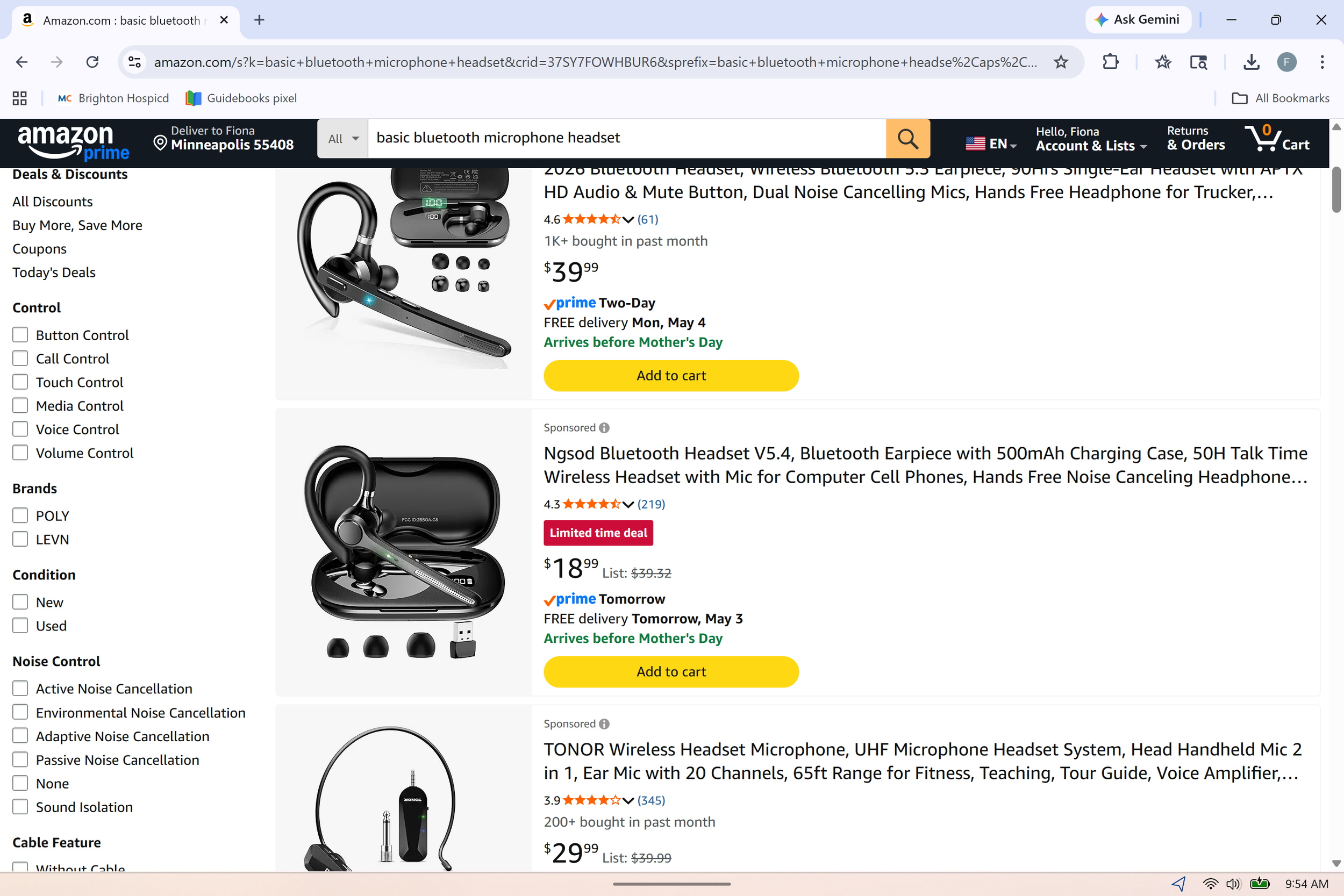
Next, unless you're dictating on your smart phone, in which case you want to have your mouth within about 3 or 4 inches of your phone consistently, you want to use a good microphone that has a mouth extension. Your buds don't work very well when you seriously and continuously dictating. But even the average run-of-the-mill basic dictation microphone that you can get for under $50 is going to be able to do the job. Some of them are better than others so always read user reviews of ordering online. One important aspect is their ability to maintain the Bluetooth connection, unless you using a USB dongle.

On your phone: most of the time your keyboard when it pops up will have a little voice icon on the right upper corner. You just tap it, speak, make corrections if needed after the text has typed out, shut your microphone and hit send. If your voice typing is not yet activated on your gboard, follow the following instructions : Settings > System > Languages & input > Keyboards > Voice typing

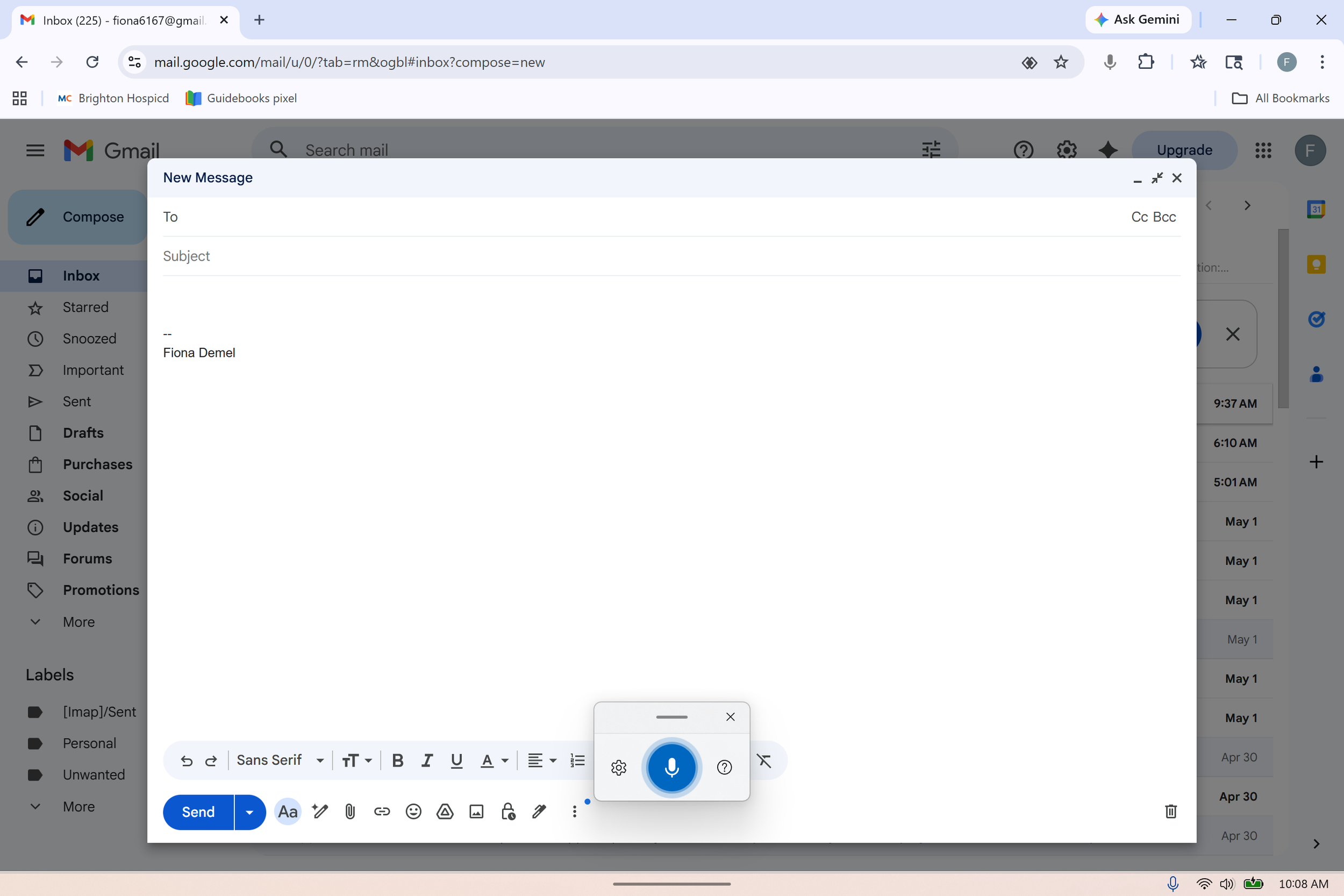
In Windows based systems (Windows 11 and later, you may be able to activated through the system settings in earlier versions), you can bring up the microphone in any part of the system by simply doing Windows key + H it will pop up in the center bottom of your screen and you can start dictating. The dictating icon shows up automatically on most all documents of the Microsoft 365 suite, such as Word documents, as you can see on the screenshot attached.

In the Google suite, you can bring up voice typing from the Tools drop-down menu, as seen in the screenshot. You can also add a browser extension for voice typing but I haven't found those to be as user-friendly and they will often ask you to upgrade to a paid subscription.

https://support.google.com/docs/answer/4492226?hl=en

Special note for people using spreadsheets: it's very different to navigate you wave and edit the spreadsheet that it is to dictate a simple text. There is a dedicated free version of an excel voice dictation software that allows heavy Excel users to learn basic commands to move to different cells, edit cells, and rearrange the spreadsheet.

https://www.speech4excel.com/en/

As you find your way around voice dictation, also understand that nowadays, we use our mouse quite a bit. Learning the list of commands is going to help you leverage the best out of voice typing and will take a little bit of time. Myself included, as I know basic commands but I'm finding out that more commands have become available that I'm having to teach my old habitual self to use.

https://support.microsoft.com/en-us/topic/voice-access-command-list-dac0f091-87ce-454d-8d57-bef38d3d8563

BLACK FRIDAY DEALS THAT MAY BE WORTH YOUR MONEY, PART 1

With Black Friday right around the corner and many folks wondering how to stretch out their hard earned dollar on which rockin' deal, I thought about sharing my top 10 list of self-care items I am willing to spend my hard earned dollars on. (Which is saying a lot being I am Swiss and we are historically frugal). Finding the top 10 cut off was really really really hard since there are so many options out there, and many more than 10 that could be beneficial, especially depending upon your individual needs. However I think that as a whole those are items that will stand the test of time in their cost-benefit ratio in improving your long-term health and well-being. As with all things health and wellness, it's going to be a dynamic list subject to change in a rapidly changing consumer market, some already putting myself a note to do a 2026 update.

Please note: I have no personal connection with any of these products and will derive no financial benefit from recommending any of these products

WALKING PADS

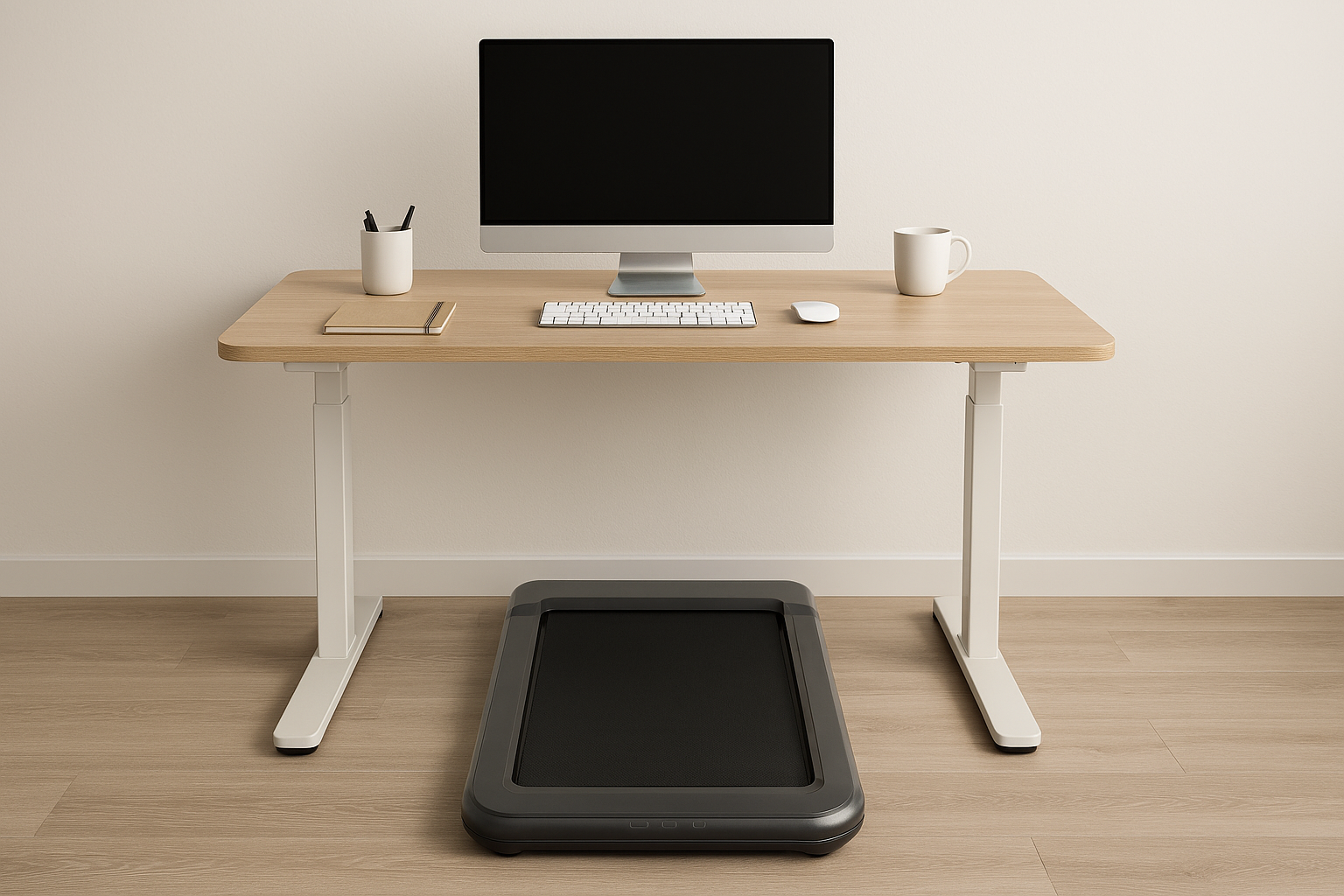
We spent the last 20 years trying to mitigate the damage done by the sedentary lifestyle of our deskbound workforce. The 1st step was to move people from 8 hours of sitting into alternating sitting to standing, which was no doubt a huge benefit. The next frontier is to get people actually moving at a normal physiological speed during their workday. The walking pads are a form of very rudimentary treadmill which are motion activated by the movement of the worker. They take little room, are very simple machines with less opportunities to break down, and have significantly come down in cost over the last 2 years. The walking pad is associated with a standing desk set up. You walk on them at approximately 1 mile per hour, which feels like a very leisurely stroll. It may not feel like much but after an 8 hour workday you could have basically walked 8 miles. The benefits are huge. There's a great deal of attention placed on NEAT (non-exercise activity thermogenesis), the energy expenditure associated with day to day light normal movement in the context of metabolic health and weight management. Using a walking pad during your regular 8 hour workday brings out more energy than engaging in your average 45 minute workout at the end of your 8 hour sitting workday. So it's a bit of a no-brainer and doesn't take any extra time out of your day. It takes a little bit to get your brain used to slow walking while you're doing other tasks, most patients tell me about 2 weeks. The other enormous benefit is improvement in peripheral circulation, and surprisingly brain health. Slow walking continuously stimulates the cross crawl pattern in the brain, which improves firing of the frontal cortex for complex tasks and memory retention.

WIDE TOE BOX SHOES

Those should really be called anatomically correct shoes. Take a look at your feet for for a few seconds then take a look at your shoe. The shape of the front of your foot rarely matches that of the front of your shoe. As a result, you're having to take these complex orthopedic sensory structure of your midfoot and toes and compress them into a space that doesn't allow them to move normally, much less transmit appropriate sensory information to your brain about your position movement and balance. Transitioning to shoes that correctly encapsulate the normally positioned front foot is totally no-brainer for me. But for most people it's a matter of aesthetics. We are just not used to seeing shoes with a wider toe box and we've been conditioned to think of narrow front shoes as being sexy and aesthetically pleasing. (Much in the way that 19th century Chinese viewed tortured bandaged feet as aesthetically desirable). Time to revolutionize your thinking and let your feet operate the way they are designed. People are always surprised by how little foot discomfort they experience when transitioning to anatomically correct toe box, that their balance improves, that the rest of the lower extremity feels better, and that in general they feel more alert. (For more sensory input from your foot, something that is especially important for children). As a bonus they are becoming more popular and available from a wide variety of routine no-name vendors, after being once the exclusive offering from specialty expensive brands.

OURA RING

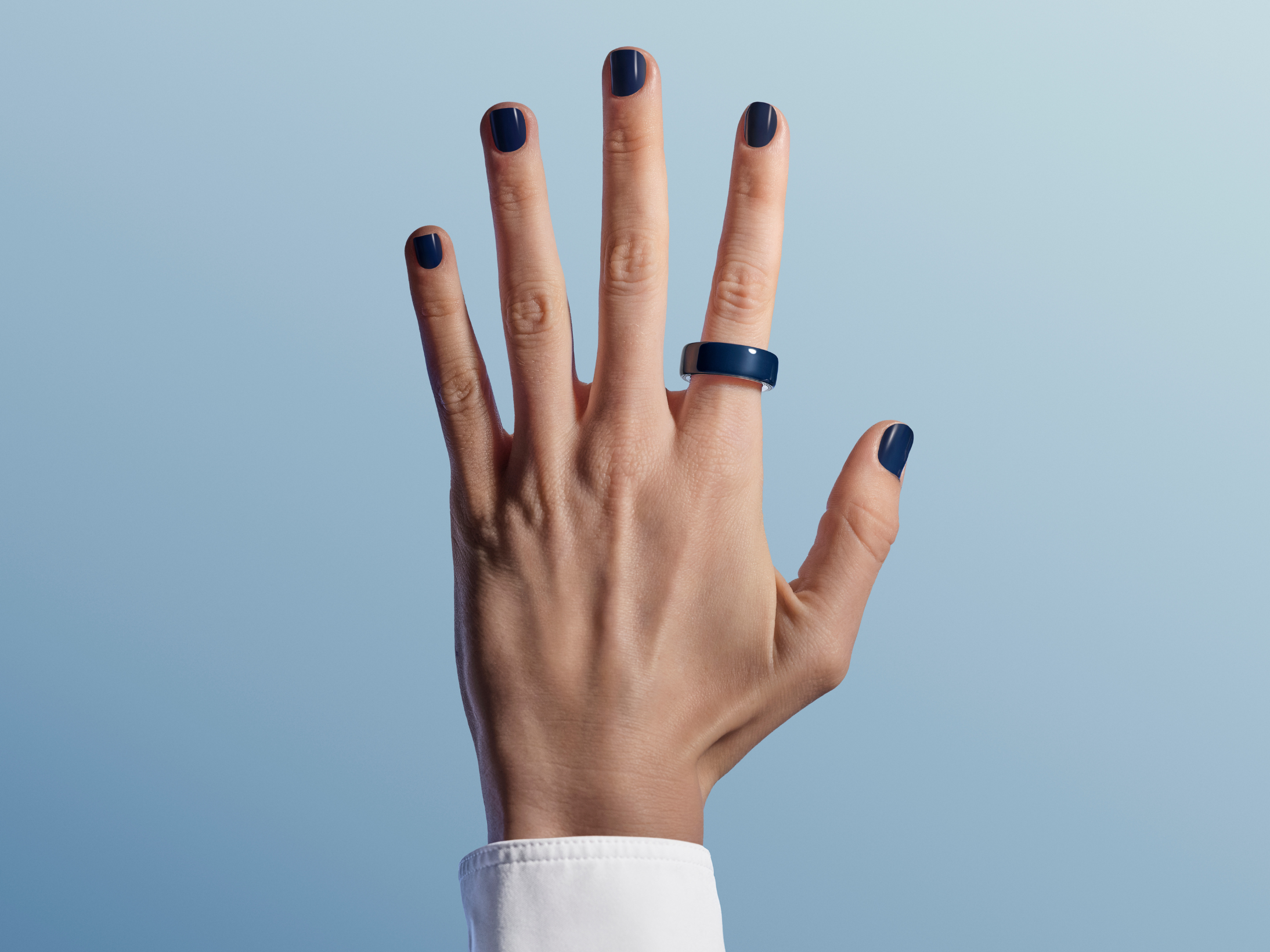
I really hesitated adding the oura ring to this list because as a rule I do not recommend a single brand product. However while the competition is getting close, it is still a pretty unique product in many ways. It falls under the category of wearable device that measure a variety of health metrics (heart rate, proxy blood pressure, pulse oximetry, sleep efficiency, temperature, etc.). 2 of the things that in my opinion make it stand out from the rest of the device is its size for the amount of data that it captures, as well as the accuracy of its HRV or heart rate variability. The latter is emerging as are really useful real-time metric of "stress", as measured by the autonomic response to a variety of outside factors. Once a baseline has been established, HRV can be a real good monitoring tool for how you fare under various circumstances as well as the responses to new health oriented interventions you may be trying: for example what is your ideal fasting window, what is your ideal exercise intensity, how well do you respond to a particular dietary change etc. The other feature that stands out for women is the surprisingly accurate cyclical temperature reading for those who are looking to to use basal body temperature for fertility monitoring, especially when it comes to spotting ovulation timing.

THERAPEUTIC INFRARED DEVICE

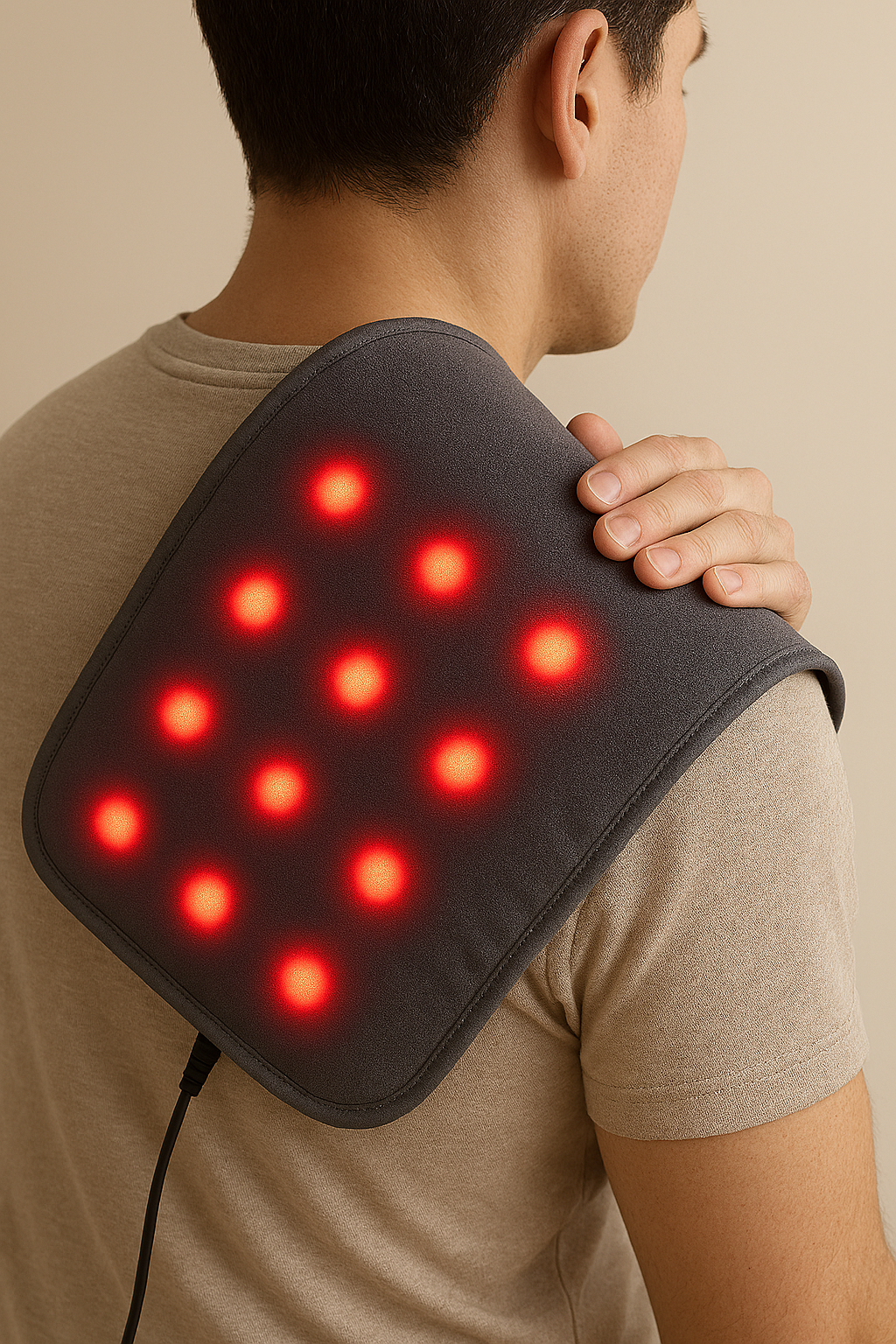
Red light therapy is a tried and true method of improving soft tissue recovery in a variety of settings from acute injuries to chronic degenerative changes. It's mostly safe although you always should consult with your healthcare provider to make sure you don't have any of the few contraindications (vascular insufficiency being 1 of them as well as some cases of diabetes). The mechanism of action has to do with improving energy production in the tissues, so it's pretty versatile for a variety of tissues from muscle tendon and nerves. I still recall the 1st unit I purchased in the early 2000, for thousands of dollars, which served me well at the time. The current technology is around the hundred dollar and many times over the power of my original unit. You have to make sure you get the right specs, which have to do with the right mix of wavelength producing diodes between 660 and 880 ideally. You also need to have sufficient density of diodes in your infrared pad to get the most benefit for the shortest treatment time. When patients asked me what they can do to speed up the recovery during a new injury or the flareup of a chronic condition, I'm always thrilled when I find out they have an infrared device at home that they can add to the mix.

WATER FILTER

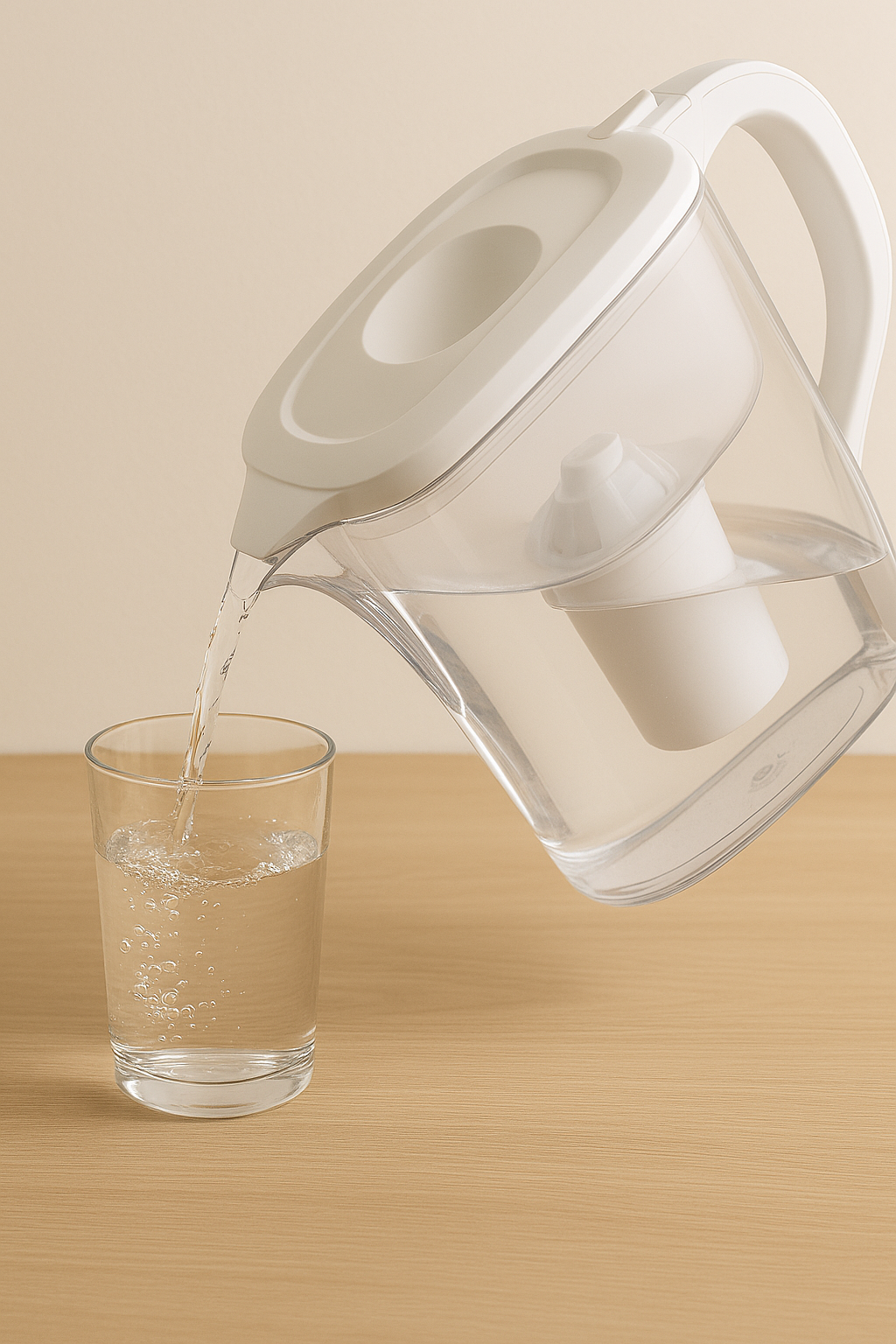
Environmental pollution affecting air and water is unfortunately not going away, and if anything going in the wrong direction. Ideally we should have better policies to limit exposures for everyone but until that elusive goal is achieved, you can take some steps to mitigate your personal exposure in a few simple ways. Total elimination is not a realistic gold, however reduction definitely is and the technology has continuously become cheaper and better. Unless you have the budget for a whole house unit which is going to be somewhere in the thousands of dollars, you can get a really solid handheld picture product for something around a hundred. Always remember that the filter is only going to be as good as the frequency at which you replace the cartridges, so put yourself a calendar reminder and ideally put your replacement cartridges on auto fill. I have been relying on the recommendation from the Environmental Working Group (our household recently upgraded to Epic when our old pitcher died and we've been extremely happy.)

https://www.ewg.org/tapwater/water-filter-guide.php


What are Modic type 1 and 2 changes on spine MRI?

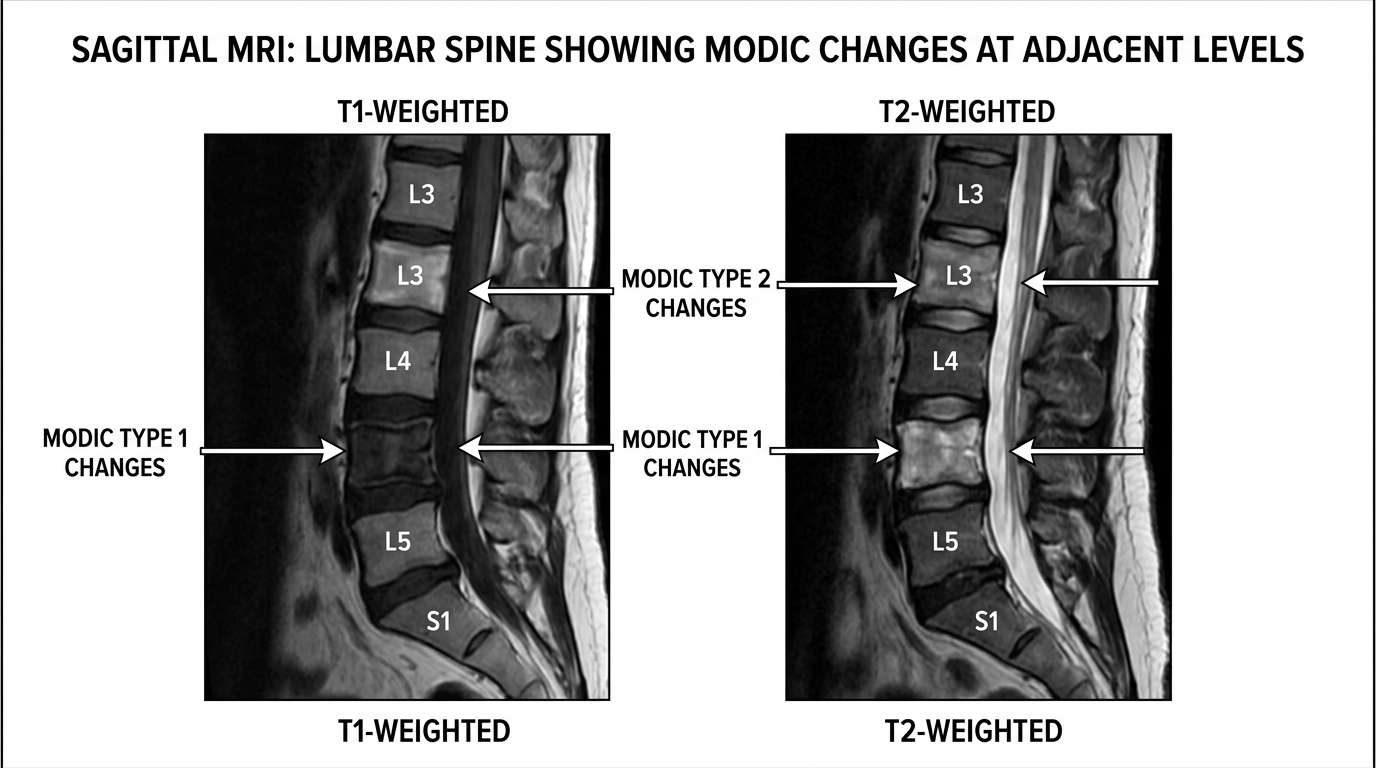
Recently I've been looking at a lot of MRIs with patients, trying to go through each line of the report and make sense of the medical jargon. One term that seems to be completely foreign to most patients is the mention of Modic type I and Modic type II changes.

Modic changes refer to some abnormal signal on the bone marrow of the vertebrae adjacent to a spinal disc. They look like abnormal coloring on the top and bottom of the vertebrae. They represent some changes in the normal bone and bone marrow with some infiltration of inflammatory cells, edema. Modic changes are the reflection of the severity and active nature of degenerative changes of the vertebral segment, where the disc degeneration starts to progress to the point of involving the adjacent bone. Modic type I changes are acute, fresh, active, and almost always correlated with active bone pain, whereas Modic type II changes are more of the chronic, potentially non-symptomatic scar tissue of a previous acute episode. The importance of noting those on an MRI is that they tend to be much more correlated with active pain than certain disc changes, especially disc bulges, which can be found at a high prevalence level in the general population but can be completely asymptomatic.

You have to remember that MRI images are extraordinary at giving you a lot of information, including pretty much everything that's ever happened to you but doesn't help you differentiate what's relevant to your particular current complaint. The presence of Modic changes, especially type I Modic changes, can help you differentiate between background degenerative findings versus an active problem. How you treat Modic one changes is more complicated than the intent of this short blog, but does need to get to the root of the mechanical stress to the affected segment and sometimes involve oral supplemental anti-inflammatory control, whether pharmacological or botanical.

Chiropractic, posture and risk of falling

https://www.researchgate.net/publication/378090792_Risk_of_Fall_Cognition_and_Static_Posture_in_Aging

I came across this very interesting article while listening to one of my chiropractic research podcasts. It reminded me of a conversation I had with a patient and her adult daughter who drove her to her appointment last year. The mother, in her early 80s, had moved closer to her daughter’s family and was trying to reestablish chiropractic care on a more consistent basis. She was a lifelong chiropractic patient, for episodic neck injuries and later on decided to stay on a preventive checkup schedule because she felt overall better and more balanced when she did so. During the history, her daughter chimed in on her mother’s comment that “ she has a tendency to be more clumsy and trip “ when she has not had a chiropractic check and adjustment in a while. The daughter was unfamiliar with chiropractic and simply curious about the correlation between the two. At the time, I share my 30 years of clinical experience in observing that correlation and the biological mechanisms connecting the chiropractic treatment on the neurological adjustment of proprioception and reflex time. I wish I had had that piece of research to add to the conversation.

The research led by a lesser known Brazilian colleague showed a correlation between two key measures of sagittal posture and the risk of fall: the degree of anterior neck shifting in relationship to the trunk, and the anterior angle of the ankle. Both indicating that the body is off its center of gravity and thus has less time to respond to stay upright before hitting the ground. Both posture indicators are exam findings that we observe and report, and both are factors that we aim to improve/correct with manual therapy and guidance on home activities and corrective exercises. One little golden nugget for me to take away from this research is that I can use it in conversation with patients when they question why I work on their lower extremities, especially their ankles and feet, when their primary problem seems to lie elsewhere. I almost often look at the lower extremity alignment when doing my initial evaluation and I will adjust them if needed, something that makes some folks a little testy when I ask them to take off their shoes and poke at one more body area. Now I can remind them that when I take on that additional endeavor at 5 pm, when their footsies are a little more “ aromatic”, it is indeed solely for their own benefit and backed by solid scientific research

(photo courtesy Freepik)

Neck pain, anterior neck posture and mouth breathing

I've had a few cases recently of pediatric and adult straight neck with persistent neck pain that didn't seem to respond to the traditional neuromusculoskeletal interventions and I thought it would be a good time to bring up a lesser known contributing Problem to chronic postural neck pain.

A loss of cervical normal anterior curvature and a so-called straight neck can be the result of many factors, including flexion trauma, chronic anterior cervical strain associated with use of technology, and some vestibular cerebellar functional disorders. The interventions supporting the chiropractic treatments can be as varied as the causes themselves, including postural awareness and reset, cervical lordotic home device etcetera.

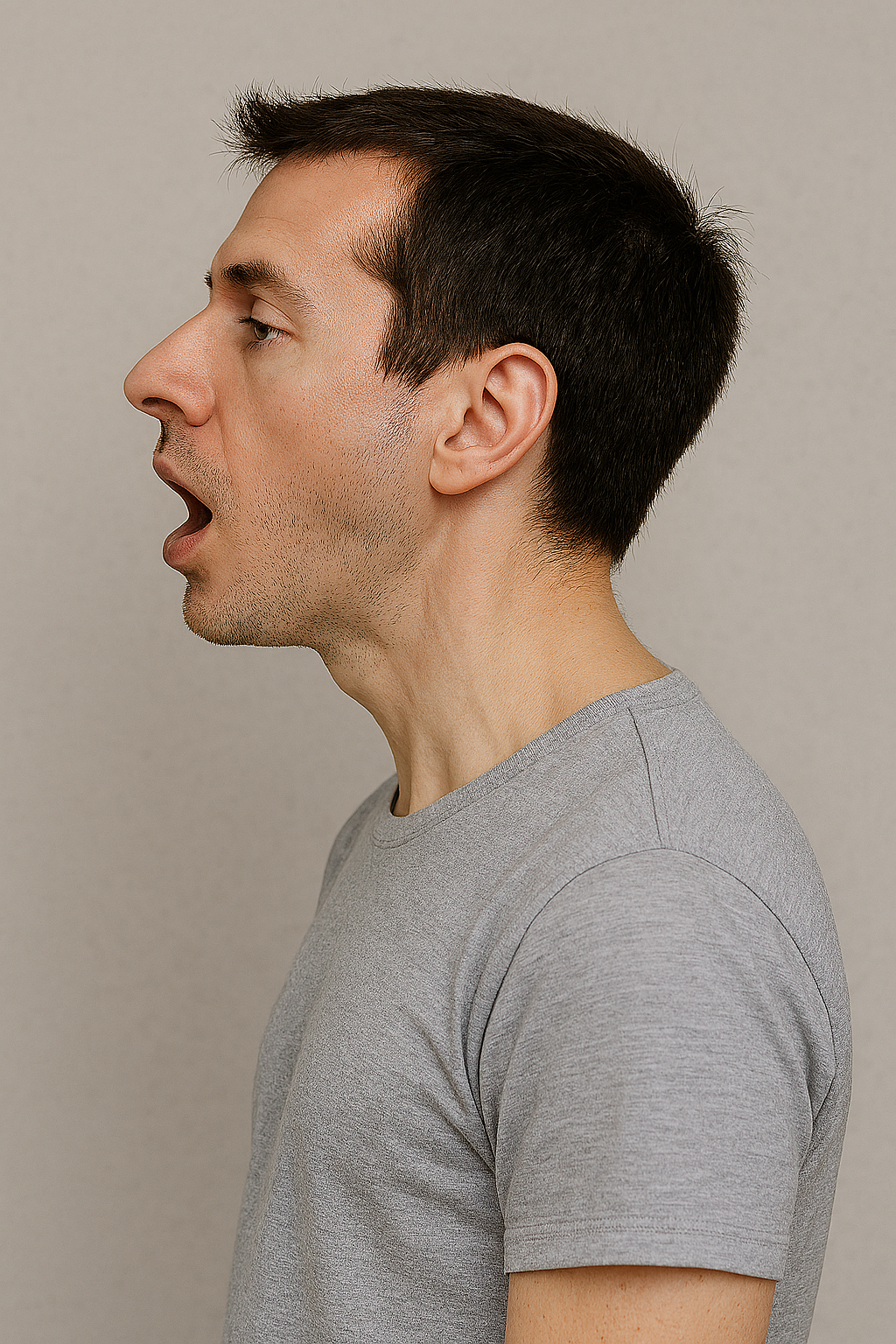
One lesser known contributing factor to chronic anterior cervical malposition is chronic mouth breathing. Normal resting breathing should be through the nose, since this is the most appropriate airway path to warm up air entering the lungs and filter for debris and pathogens. A person will switch from normal nasal breathing to mouth breathing if there is compromise of the nasal airways, in the form of chronic narrow airways ( narrow hard palate in children especially), chronic congestion from allergies or infections, chronic enlarged tonsils and adenoids, and chronic structural issues with the airways such as severe deviated septum. Positioning the head slightly anterior will actually increase the diameter of the oral airway, and becomes an adaptative posture in many patients with upper airway compromise. In patients with strained anterior cervical spine from mouth breathing, the patient will often notice increase neck pain during  during cardiovascular endurance activities ( which will further strain the airways and accentuate the adaptative anterior neck posture)as well as during static sitting and laying flat on their back. Mouth breathing is surprisingly common and often completely below a patient's radar unless assessed or noticed by somebody around them.

Obviously resolving chronic cervical discomfort in those patients is going to require looking at resolving some of the underlying airway problems. In the meantime however, in addition to the more traditional chiropractic intervention with manual therapy and corrective exercises, retraining the patient to breathe through their nose with efficiency can make a real big difference in stabilizing the cervical complaints.

Can I have a pinched blood vessel ?

Patients will often precede a question with the disclaimer “ this may be a dumb question, but I am wondering if….”. This disclaimer almost always guarantees that they are usually pretty astute in their observation and closing in on some matter of importance.

The latest “dumb question” that came up this week was interesting: could my symptoms be caused by a pinched blood vessel ?  The patient had some pins and needles sensations in the front of the shoulder, they had noticed that the skin on the front of the arm was a little darker and a little colder than on the other side. Good logic led them to wonder if there was decreased blood flow in the affected area.

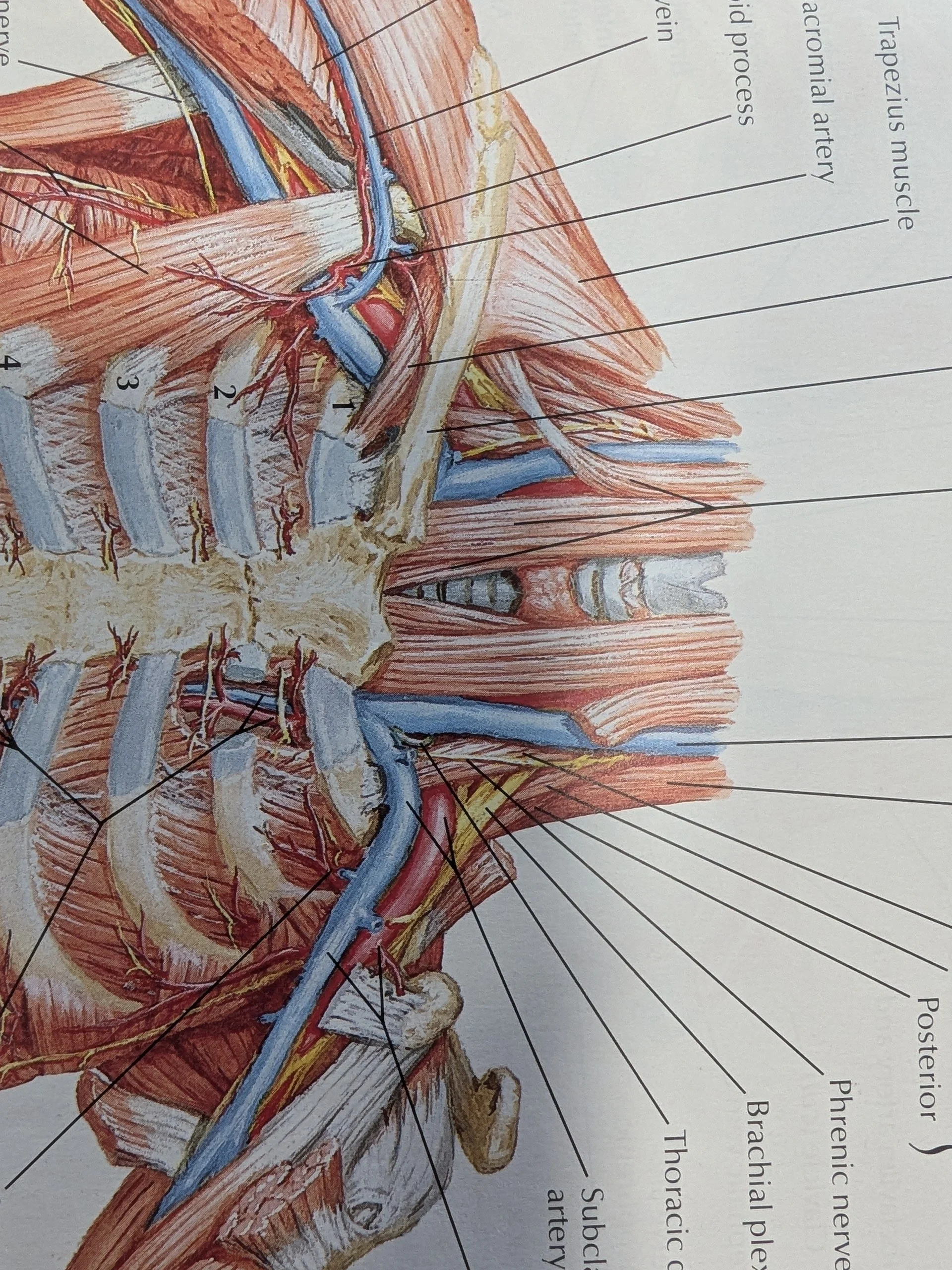
The surprising answer to that question is not only: yes !, but the fact that most instances of pinched nerves probably have some degree of pinched vascular structures that go along with the pinched nerve. And there is a very simple reason for that: if you go back to basic anatomy, nerves, arteries and veins very often travel as a trio before splitting off prior to their final destination. Anyone who has done college level anatomy will recall the acronym NAV, standing for  nerve, artery and vein, describing the bundles of the three structures lumped together. And anyone who has done anatomy cadaver dissection recalls how difficult it was to separate the three structures from each other and tell them apart.

From a practical and clinical standpoint, there is a lot of overlap in the symptoms of nerve and vascular compression. Both can cause pain, and both can cause abnormal sensation like numbness and tingling, making it difficult to differentiate them based on symptoms alone. Physical examination can be helpful, but also somewhat limited. Mild vascular compression can cause subtle swelling, changes in color and temperature, but those can be difficult to differentiate from inflammation related edema, and most body areas have collateral circulation that can take over when there is mild vascular compression from one source. 

In day to day chiropractic practice, we tend not to aim our treatment to relieve mild vascular compression independent from relieving nerve compression, which is probably why we talk about this topic infrequently. Relieving nerve compression is the main goal, and vascular structures will basically benefit from that approach. Nerve tissue and vascular tissues have distinct features that makes nerves more vulnerable in NAV bundles: they lack collateral back up, and they are not as adaptable to move out of the way of compressive forces. But that is not to say that some patients will show up with unusually strong vascular compression symptoms that need to be taken into account when setting up a treatment plan, for example limiting the use cold pack therapy and compression

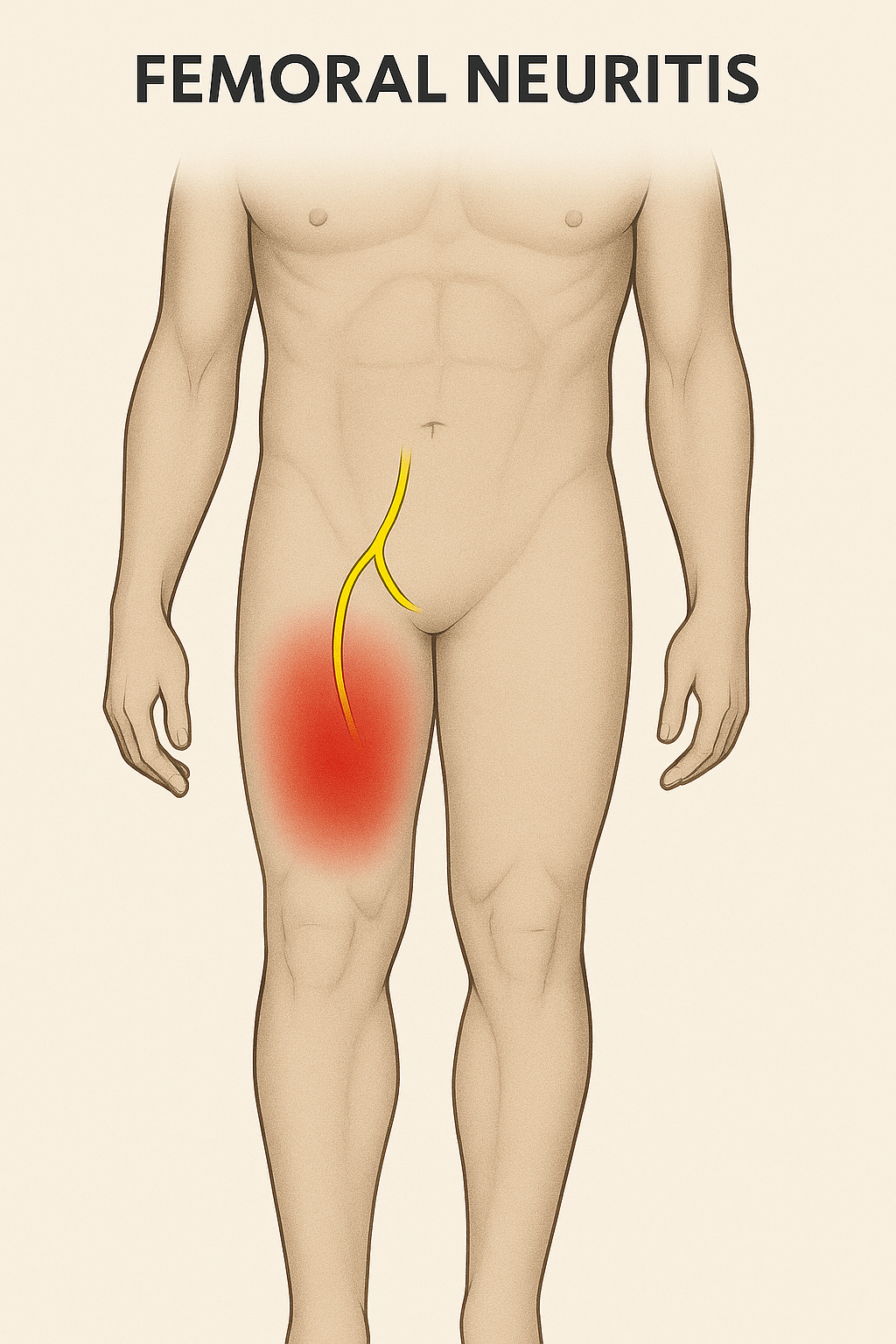
Femoral neuritis: the "other sciatica"

Femoral Neuritis

Sciatica enjoys quite a bit of popularity, and rightfully so. It is not technically a medical diagnosis but the description of symptoms encompassing pain in the leg, generally assumed to stem from the low back. The sciatic nerve originates at 5 levels spanning the last two lumbar vertebrae/discs, and the upper three sacral segments. It travels through several soft tissue structures in the buttock, down the posterior thigh, before splitting into two different branches at the knee, covering the lateral and posterior calf and foot. As such, sciatica describes referred pain affecting this distribution pattern.

Patients often use the term “sciatica” pretty liberally, to describe any sort of pain in the leg, including pain in the front of the thigh, which is not a sciatic nerve distribution. Enter its lesser known cousin, the femoral nerve.

Femoral neuritis is actually surprisingly common but getting little recognition ( it is still less common than sciatic neuritis). The femoral nerve originates in the mid lumbar spine and is made up from nerve roots from lumbar segments L2 through L4.  It travels in the front of the lumbar spine, deep in the abdomen, through the intersection of the two branches of the iliopsoas hip flexor muscles, through the groin and into the anterior and medial aspect of the thigh. It does not extend very far below the knee, unlike the sciatic nerve, which extends all the way into the foot.

The femoral nerve can be compressed in the lumbar spine, by a mid lumbar disc herniation, and just as commonly by myofascial injuries in the hip flexors. The patient will often present with unexplained groin, hip, thigh and medial knee pain and tingling. Unlike sciatic neuritis, many patients will not initially recognize  femoral neuritis as referred pain from the lumbar spine since it manifests in the front of the trunk and leg.

Femoral neuritis will be treated in the same manner as sciatic neuritis, based on the source / cause of the problem: chiropractic adjustments, myofascial release, corrective exercise, supportive therapies etc.

Can the low back cause abdominal pain ?

It's a question that has been posed to me on a couple of occasions. Obviously, abdominal pain can have many pain generating structures, and internal abdominal organs are going to be the primary source of pain. However, I have had many a case over my 30 years in practice where a patient came in with persistent vague lower abdominal discomfort that felt really deep, and had had a battery of tests from ultrasounds, endoscopies, colonoscopies, and a boatload of labs, without any explanation for the continued symptoms. In the process of working up the patient for some other symptoms (lower back with thoracic pain most commonly), the patient reports a substantial improvement in their long-standing abdominal pain when starting chiropractic care.

An older and wiser colleague who mentored me in my early career once said: "there is as much lumbar spine in the front as there is in the back". The point was that the posterior aspect of the lumbar spine gets the lion's share of attention, since the posterior structures such as the facet joints, and the posterior margin of the lumbar discs, have a higher density of fine discriminating pain sensors, and all the spinal nerves which exit posterior to the center of the vertebral body can basically only be compressed in the posterior half of the lumbar spine. However, this is not to say that anterior lumbar pain generating structures do not exist or that they are rare. Anterior lumbar disc herniations are clearly seen on MRIs. They do not often get the attention they deserve, since orthopedic and neurosurgical providers are more focused on spinal nerve compression. Anterior lumbar disc herniations and the pain they generate is going to be more vague, and have more of an autonomic pain component: pain, malaise, nausea, fatigue, cold sweats, etc. One of the distinguishing features of abdominal pain of anterior lumbar origin is that it is going to be triggered by positional and mechanical factors much more so than digestive triggers. In this scenario, a thorough chiropractic examination is certainly worth investigating if you or a loved one has been dealing with continued unexplained abdominal pain that has been medically investigated with no answers.